"Wellcome To Our All News Update Website"

"All News Updates Is The Greatest News Based Web Site, This Website Provides : All Kinds Of News That Means All News Updates"

"Sport News"

ICC World Twenty20 2012 - groups

"Entertainment"

Australian-born, London-based artist Ralph Heimans' new official portrait of Her Majesty The Queen, has been unveiled at the National Portrait Gallery in Canberra, Australia.

A New Smartphone App

A new smartphone app aims to provide a cheaper alternative to ultrasound in Africa by bringing an old technique into the 21st century.

Can you build a human body?

We will meet a woman deciding whether to have her hand cut off for a bionic replacement and analyse the potential to take the technology even further, enhancing the body to superhuman levels.

Wednesday, June 27, 2012

Helping mothers, babies in one of the worst places for survival

Watch this video

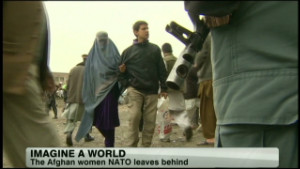
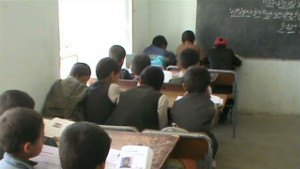
The young women in a Kabul classroom are learning how to deal with a difficult birth. As instructors watch over and guide the simulation, the girls gently tug at a baby doll as it passes through the model of a birth canal.
These students, all in their third semester at the Ghazanfar Institute of Health Sciences, will soon join the growing number of midwives in a country where being a mother is ranked among the worst in the world. Women in Afghanistan are 70 times more likely to die in childbirth than from a bullet or a bomb, according to Save the Children.
It's a grim statistic the women here are trying to change.
"My father encouraged me to do this because when he was 10, he lost his mother when she was giving birth to another child," says Almasa Katawazi, who, like the rest of her classmates, hopes to make Afghanistan a better, safer place for mothers and their babies.
Taliban take forceful control of schools
Women tortured for saying 'no'
Civilians hurt by unexploded munitions
Rape victim's mom wants justice or death
Katawazi says she wants women in far-flung provinces to have access to good medical facilities, doctors and midwives. To that end, she says she plans to go and work in Paktika province once she's certified.
In 2003, there were only about 500 midwives in Afghanistan. Today, there are some 3,000. But many more are needed.
"Increasing the numbers of midwives, particularly midwives that live and work within communities and rural communities that might not have access to other health services is an extremely important factor in reducing maternal mortality," says Rachel Maranto of Save the Children.
Still, less than two-thirds of Afghan women have access to nearby health facilities.
"Many, many mothers and children will never see a trained health worker, a doctor, a nurse or a midwife in their lifetime," Maranto says, "and that really needs to be improved and turned around."
It's one of the reasons why groups such as Save the Children, along with other nongovernmental organizations and foreign donors, are funding programs in conjunction with the country's Ministry of Public Health to improve the chances of mothers' and children's welfare and survival.
A mother bravely campaigns for president
One pilot program in Guldara District teaches volunteers how to become community health workers. Many of the women being trained have lost mothers, sisters and cousins to pregnancy-related complications. Many have also buried their babies. They decided it was time to change things.
The women are illiterate, so they learn from pictograms.
"It's good work," says Noorzi, a mother of six. "In my village, maternal mortality has gone down 100% in the last two years."
Noorzi's village may be an exception, but most women there now give birth in the presence of qualified health workers.
Still, sustaining and spreading initiatives such as this one will take even more investment from the international community.
And while NGOs point to a certain success in the reduction of mother and child mortality rates in recent years, the situation in Afghanistan remains dire -- here, a woman dies from pregnancy-related causes every two hours.
That statistic is just one that illustrates the fragile state of women in Afghanistan more than a decade since Western forces ousted Taliban rule.
Speaking out against rape | Tortured teen: 'Same should be done to them'
Back in the Kabul classroom, the midwives in training stay focused.
"Their main goal should be serving mothers and decreasing the rate of maternal mortality," says Turpekai Azizi, a midwife instructor.
It's a noble goal, but one that could be in jeopardy, women and aid workers say they fear, if foreign funding falls off once coalition troops withdraw.


Growing Evidence of Agent Orange in Japan

Growing evidence indicates that during the U.S. occupation of Okinawa from 1945 to 1972, the U.S. violated a treaty to not store herbicides within Japan's political boundaries. Accusations that the defoliant Agent Orange was present in Japan in the late 60s, is gaining ground as the latest reports point to a massive stockpile apparently disposed on the grounds at Futenma air station in Okinawa after the end of the Vietnam War. Former Lt. Col. Kris Roberts said he unearthed hundreds of rusty barrels leaking the defoliant in 1981.
However, despite repeated allegations that the U.S. military stored, transported and even buried hundreds of barrels of Agent Orange in Okinawa, the Pentagon continues to deny the accusations.
Ex-U.S. serviceman Larry Carlson says he saw it sprayed as a weed killer at Kadena Air Force Base in Naha and was later granted benefits from the U.S. government due to the resulting illnesses derived from the exposure. Carlson says the toxic defoliant was stored on Okinawa and then loaded onto merchant ships such as the USS Comet and the SS Transglobe, headed to Vietnam. But Carlson remains the only ex-service man in Okinawa to receive health care benefits from the U.S. government.
Ex-serviceman Michael Jones and longshoreman James Spencer both confirmed that Naha's port was used to transport thousands of barrels of herbicide, including Agent Orange.
Joe Sipala, a former U.S. Air Force mechanic who runs a Facebook Page, Agent Orange Okinawa, says he sprayed the defoliant regularly as a weed-killer at the Awase Transmitter Site in Okinawa and that he now suffers from multiple diseases as a result.
2012-06-19-JoeSipala.jpg
Joe Sipala rides his motorcycle next to a barrel of Agent Orange (third from left) on Okinawa in 1970. PHOTO COURTESY OF JOE SIPALA
Former marine Scott Parton alleges that he saw barrels of Agent Orange on the Camp Schwab base in 1971.
Another vet, who prefers to remain anonymous, said that in the late 1960s, the U.S. military buried barrels of Agent Orange in an area around Chatan. As a forklift driver at a U.S. Army supply depot at that time, he said he helped load Agent Orange onto trucks to transport it to a port in Naha, from which they would be loaded onto ships headed to Vietnam. Yet another vet says that in 1969 he saw barrels of agent orange buried in a 45-meter-long trench at Hamby Air Field.
Most affected vets have not been able to receive health benefits, in large part due to the government's refusal to admit the defoliant was ever present on Okinawa. In July of 2004, chairman of the Joint Chiefs of Staff, General Richard Myers, declared that government "records contain no information linking use or storage of Agent Orange or other herbicides in Okinawa."
However, a history of misconduct suggests otherwise. In the 60s, when suspicions were aroused among Okinawan residents that the U.S. military was storing biochemical munitions, the authorities denied the claims. However, they were forced to take action when a leak of nerve gas sickened 23 U.S. soldiers in 1969. As a part of Operation Red Hat, 12,000 tons of chemical munitions was removed from Okinawa and transferred to Johnston Atoll in the middle of the Pacific Ocean.
The denial of the Department of Defense that Agent Orange was ever on Okinawa means the affected servicemen cannot receive benefits despite their apparent exposure. "I will continue the fight to get both the Japan and American governments to recognize Agent Orange was used on Okinawa," Sipala told me in an interview.
Jon Mitchell, a British journalist who has worked diligently to uncover evidence and expose veterans' stories, hopes his efforts will affect a change. "All of us are seeking justice for the thousands of veterans potentially exposed and the Okinawan civilians poisoned by these chemicals. This is not a political issue -- it's a human rights issue and an environmental tragedy. Time is running out for these service men and women -- and the U.S. government needs to come clean and help them before it's too late," Mitchell said via email. He hopes more men and women exposed to the defoliant on Okinawa will come forward.
Amy Chavez is author of 'Japan, Funny Side Up' and the forthcoming 'Running the Shikoku Pilgrimage: 900 Miles to Enlightenment' (summer 2012)

Nora Ephron Talks Her Last Meal, Aging And More On 'Charlie Rose'

Nora Ephron Last Meal
Nora Ephron talked last meals, aging and more with Charlie Rose.

When Nora Ephron released her book, "I Remember Nothing," two years ago, the late beloved screenwriter, author and playwright sat down for a rare television interview with Charlie Rose.
Ephron ended "I Remember Nothing," which would become her last book, with two lists: "What I Won't Miss," and "What I Will Miss." Death was seemingly something she had thought about, even though she didn't make her battle with acute myeloid leukemia known to the public.
In her interview with Rose in late 2010, Ephron discussed the inspiration for her book, her mother's alcoholism, journalism, and also shared her thoughts on aging and why it's important to have your last meal.
"Is there anything right with getting older?" Ephron inquired when Rose asked what she doesn't like about the aging process. After he suggested wisdom, Ephron said: "Wisdom when you can't remember anything is not quite there. Having more time to read when you can't see? I don't think it's better to be older ... It doesn't have to be bad, but you have to know that at some point it will be -- and sooner rather than later, which is why it's very important to eat your last meal before it actually comes up."
Ephron, an admitted food lover, went on: "When you are actually going to have your last meal, you'll either be too sick to have it or you aren't gonna know it's your last meal and you could squander it on something like a tuna melt and that would be ironic. So it's important ... I feel it's important to have that last meal today, tomorrow, soon."
So what would her last meal be? A hot dog from Beverly Hill's famous Nate 'n Al deli ... with some Gulden's mustard and perhaps some sauerkraut or relish. Why Nate 'n Al's? "It's the greatest hot dog," Ephron explained.
And clearly, that wasn't the only deli that made an impression on Ephron or her fans: The iconic fake orgasm scene between Billy Crystal and Meg Ryan's characters at Katz's Deli in New York in "When Harry Met Sally" is movie legend and lead to one of cinema's most famous quotes.

Sunday, June 24, 2012

Alan Turing: Inquest's suicide verdict 'not supportable'

Alan Turing picture
Turing was found dead in his bed by his housekeeper
 

Alan Turing, the British mathematical genius and codebreaker born 100 years ago on 23 June, may not have committed suicide, as is widely believed.

At a conference in Oxford on Saturday, Turing expert Prof Jack Copeland will question the evidence that was presented at the 1954 inquest.
He believes the evidence would not today be accepted as sufficient to establish a suicide verdict.
Indeed, he argues, Turing's death may equally probably have been an accident.
What is well known and accepted is that Alan Turing died of cyanide poisoning.
His housekeeper famously found the 41-year-old mathematician dead in his bed, with a half-eaten apple on his bedside table.
It is widely said that Turing had been haunted by the story of the poisoned apple in the fairy tale of Snow White and the Seven Dwarfs, and had resorted to the same desperate measure to end the persecution he was suffering as a result of his homosexuality.
But according to Prof Copeland, it was Turing's habit to take an apple at bedtime, and that it was quite usual for him not to finish it; the half-eaten remains found near his body cannot be seen as an indication of a deliberate act.
Indeed, the police never tested the apple for the presence of cyanide.
Moreover, Prof Copeland emphasises, a coroner these days would demand evidence of pre-meditation before announcing a verdict of suicide, yet nothing in the accounts of Turing's last days suggest he was in anything but a cheerful mood.
He had left a note on his office desk, as was his practice, the previous Friday to remind himself of the tasks to be done on his return after the Bank Holiday weekend.
Nevertheless, at the inquest, the coroner, Mr JAK Ferns declared: "In a man of his type, one never knows what his mental processes are going to do next." What he meant by "of his type" is unclear.
The motive for suicide is easy to imagine. In 1952, after he had reported a petty burglary, Turing found himself being investigated for "acts of gross indecency" after he revealed he had had a male lover in his house.
Faced with the prospect of imprisonment, and perhaps with it the loss of the mathematics post he held at Manchester University, which gave him access to one of the world's only computers, Turing accepted the alternative of "chemical castration" - hormone treatment that was supposed to suppress his sexual urges.
It is often repeated that the chemicals caused him to grow breasts, though Turing is only known to have mentioned this once.
The authorities' continuing interest in Turing became apparent in 1953 when a gay Norwegian acquaintance, Kjell, announced by postcard his intention to visit him at his Wilmslow home, but mysteriously never arrived.

Turing told a friend, by way of explanation: "At one stage, the police over the north of England were out searching for him."
With six decades of hindsight, these oppressive attentions, the nation's failure to appreciate his wartime contributions, his apparent sidelining at the Manchester computer department, have led to a tragic picture of Turing being hounded during his last years, and suicide being a natural outcome.
But Prof Copeland argues that on the contrary, Turing's career was at an intellectual high, and that he had borne his treatment "with good humour".
Of the Kjell affair, Turing had written that "for sheer incident, it rivalled the Arnold [gross-indecency] story"; and immediately after his conviction had told a friend: "The day of the trial was by no means disagreeable.
"Whilst in custody with the other criminals, I had a very agreeable sense of irresponsibility, rather like being back at school."
On the face of it, these are not the expressions of someone ground down by adversity.

A centenary celebration at Cambridge University considers Turing's legacy
What is more, Turing had tolerated the year-long hormone treatment and the terms of his probation ("my shining virtue was terrific") with amused fortitude, and another year had since passed seemingly without incident.
In statements to the coroner, friends had attested to his good humour in the days before his death.
His neighbour described him throwing "such a jolly [tea] party" for her and her son four days before he died.
His close friend Robin Gandy, who had stayed with him the weekend before, said that Turing "seemed, if anything, happier than usual".
Yet the coroner recorded a verdict of suicide "while the balance of his mind was disturbed".
Prof Copeland believes the alternative explanation made at the time by Turing's mother is equally likely.
Turing had cyanide in his house for chemical experiments he conducted in his tiny spare room - the nightmare room he had dubbed it.
Bombe machine replica  
Bombe decryption machine: We should focus on Turing's genius, says Prof Copeland
He had been electrolysing solutions of the poison, and electroplating spoons with gold, a process that requires potassium cyanide. Although famed for his cerebral powers, Turing had also always shown an experimental bent, and these activities were not unusual for him.
But Turing was careless, Prof Copeland argues.
The electrolysis experiment was wired into the ceiling light socket.
On another occasion, an experiment had resulted in severe electric shocks.
And he was known for tasting chemicals to identify them.
Perhaps he had accidentally put his apple into a puddle of cyanide.
Or perhaps, more likely, he had accidentally inhaled cyanide vapours from the bubbling liquid.
Prof Copeland notes that the nightmare room had a "strong smell" of cyanide after Turing's death; that inhalation leads to a slower death than ingestion; and that the distribution of the poison in Turing's organs was more consistent with inhalation than with ingestion.
In his authoritative biography, Andrew Hodges suggests that the experiment was a ruse to disguise suicide, a scenario Turing had apparently mentioned to a friend in the past.
Stilboestrol tablets Turing was injected with Stilboestrol - a synthesised form of oestrogen
But Jack Copeland argues the evidence should be taken at face value - that an accidental death is certainly consistent with all the currently known circumstances.
The problem, he complains, is that the investigation was conducted so poorly that even murder cannot be ruled out. An "open verdict", recognising this degree of ignorance, would be his preferred position.
None of this excuses the treatment of Turing during his final years, says Prof Copeland.
"Turing was hounded," he told the BBC, adding: "Yet he remained cheerful and humorous."
"The thing is to tell the truth in so far as we know it, and not to speculate.
"In a way we have in modern times been recreating the narrative of Turing's life, and we have recreated him as an unhappy young man who committed suicide. But the evidence is not there.
"The exact circumstances of Turing's death will probably always be unclear," Prof Copeland concludes.
"Perhaps we should just shrug our shoulders, and focus on Turing's life and extraordinary work."
Roland Pease has produced two episodes of Discovery on the BBC World Service devoted to Turing. In the first, he follows the events leading up to Turing's design for a fully programmable computer (Ace) at the National Physical Laboratory. In the second episode, to be broadcast on Monday, he explores the life and legacy of Turing. Both programmes are presented by Standup Mathematician Matt Parker.

Rory Cellan-Jones visits the exhibition dedicated to the life and work of Alan Turing.

US coach Jerry Sandusky guilty of Penn State sex abuse

 
How the Jerry Sandusky scandal rocked US sport and left parents concerned for their children
Former US college football coach Jerry Sandusky has been found guilty of 45 out of 48 counts of child sex abuse.
Sandusky, 68, denied 48 counts of abusing 10 boys over 15 years. He is expected to appeal but could spend the rest of his life in prison.
The jury reached its verdict at the end of its second day of deliberations.
His arrest in November caused a scandal at Penn State University, Pennsylvania, that saw the president and legendary football coach Joe Paterno both fired.
The jury found the former coach not guilty of involuntary deviate sexual intercourse with Victim 2 and indecent assault of Victims 5 and 6.
After the verdict, Sandusky's bail was revoked and he was taken into custody in Bellefonte, Pennsylvania.

'Horrific acts'

After the verdict, defence lawyer Joe Amendola told reporters the family was "very disappointed" with the verdict, although it was "expected".
He suggested that Sandusky would appeal against the verdict and acknowledged that his client would be likely to face a life sentence.
Pennsylvania Attorney General Linda Kelly called Sandusky a "serial predator" who committed "horrific acts".
Ms Kelly said that she hoped the verdict "allows these victims to heal" and would also encourage other victims to come forward.
Meanwhile, Penn State said in a statement: "We have tremendous respect for the men who came forward to tell their stories publicly.
"No verdict can undo the pain and suffering caused by Mr Sandusky, but we do hope this judgment helps the victims and their families along their path to healing."
The BBC's Kate Dailey, who was in the courtroom in Bellefonte, said Sandusky gave a small wave to his family as he was led away.
Outside the courthouse a large crowd cheered as news of the verdict emerged, our correspondent adds.
The decision, delivered by a jury of seven women and five men, came after about 21 hours of deliberations over two days.
Pennsylvania Attorney General Linda Kelly said she hoped the ''search for justice'' would help other victims

'Unfolding accusations'

Sandusky, who did not testify, was accused of abusing boys he met through Second Mile, a charity he founded for at-risk youth.
He allegedly abused them at his home, in hotels and the athletic facilities of Penn State.
Eight men aged between 18 and 28 testified during the nearly two-week trial, providing graphic details of the alleged abuse.
One witness told the court how he hid and then threw away underwear after Sandusky allegedly forced him to have anal sex, making him bleed.
In cross-examination during the trial, defence lawyer Joe Amendola pressed the accusers for further details of their allegations, as well as contacts they had with Sandusky since the alleged abuse.
At least six accusers said they told incorrect or incomplete stories in early contacts with police, while three told the court that some details only came back to them in recent years.
A former graduate assistant and key prosecution witness, Mike McQueary, told the jury he saw Sandusky standing naked behind a boy in a Penn State shower, slowly moving his hips.
Meanwhile, Sandusky's wife, Dottie, also took the stand and told the court about her husband's charitable work with children. The defence called 28 witnesses, many of whom spoke about the coach's high standing in the community.
Sandusky's arrest in November led to the firing of several Penn State officials amid accusations that the university had failed to act on reports of suspected abuse.
Two Penn State administrators are awaiting trial for failing to report the suspected abuse and lying to the grand jury.
Penn State boasts one of the proudest football traditions in the country.