"Wellcome To Our All News Update Website"

"All News Updates Is The Greatest News Based Web Site, This Website Provides : All Kinds Of News That Means All News Updates"

"Sport News"

ICC World Twenty20 2012 - groups

"Entertainment"

Australian-born, London-based artist Ralph Heimans' new official portrait of Her Majesty The Queen, has been unveiled at the National Portrait Gallery in Canberra, Australia.

A New Smartphone App

A new smartphone app aims to provide a cheaper alternative to ultrasound in Africa by bringing an old technique into the 21st century.

Can you build a human body?

We will meet a woman deciding whether to have her hand cut off for a bionic replacement and analyse the potential to take the technology even further, enhancing the body to superhuman levels.

Saturday, June 30, 2012

Euro 2012 final: Spain v ItalyLive


Jordi Alba

Spain sealed their place in history as the first side to win three successive major international tournaments with a stunning victory over Italy in Kiev.
The Spanish were at their scintillating best to make a mockery of suggestions they are not entertaining to watch.
A David Silva header, and neat finishes from Jordi Alba, Fernando Torres and Juan Mata gave La Rojas the win.
But the whole team played their part to seal the largest winning margin in a European Championship final.
The scoreline was perhaps cruel on Italy, who were forced to play the last 30 minutes with 10 men following an injury to Thiago Motta shortly after they had made their third and final substitution.
However, even when the teams were equal in number, reigning World and European champions Spain dominated and never looked like relinquishing their grip on the Henri Delaunay trophy they won in Vienna four years ago.
Their play sparkled with intelligence and imagination as they wove intricate triangles in and around the Italian box. Their goals owed as much to wonderfully constructed build-ups - in which midfielder's Cesc Fabregas and Xavi played prominent parts - as they did to clinical finishing.
More to follow.

Lineup, Bookings (2) & Substitutions (6)

Spain

  • 01 Casillas
  • 03 Pique Booked
  • 15 Ramos
  • 17 Arbeloa
  • 18 Alba
  • 06 Iniesta (Mata - 87' )
  • 08 Xavi
  • 10 Fabregas (Torres - 75' )
  • 14 Alonso
  • 16 Busquets
  • 21 Silva (Pedrito - 59' )

Substitutes

  • 12 Valdes
  • 23 Reina
  • 02 Albiol
  • 04 Martinez
  • 05 Juanfran
  • 20 Cazorla
  • 22 Navas
  • 07 Pedrito
  • 09 Torres
  • 11 Negredo
  • 13 Mata
  • 19 Llorente

Italy

  • 01 Buffon
  • 03 Chiellini (Balzaretti - 21' )
  • 07 Abate
  • 15 Barzagli Booked
  • 19 Bonucci
  • 08 Marchisio
  • 16 De Rossi
  • 18 Montolivo (Motta - 56' )
  • 21 Pirlo
  • 09 Balotelli
  • 10 Cassano (Di Natale - 46' )

Substitutes

  • 12 Sirigu
  • 14 De Sanctis
  • 02 Maggio
  • 04 Ogbonna
  • 06 Balzaretti
  • 05 Motta
  • 13 Giaccherini
  • 22 Diamanti
  • 23 Nocerino
  • 11 Di Natale
  • 17 Borini
  • 20 Giovinco


2137: 
BREAKING NEWS - Spain win Euro 2012

"New app tracks Colorado wildfires"

"Uh-oh, I smell smoke again, hang on ..."
Robbie Trencheny, a 20-year-old programmer based in Colorado Springs, Colorado, walked away from our Skype video call to look at the billowing clouds of smoke outside. When he returned: "Yeah, it really smells like a bonfire out here now," he said.
As of Wednesday afternoon, the Waldo Canyon wildfire has burned more than 15,000 acres in the mountains just outside Colorado Springs. It's moving fast and doubled in size overnight. Several neighborhoods in the western part of the city, and part of the Air Force Academy, have been evacuated, and homes have been destroyed.
Trencheny lives about five miles east of the blaze. An avid Twitter user, he saw the flood of discussion about the fire there, and he decided to help make it easier to follow the action.
  Photos: Wildfires rage in West
So in about 45 minutes of coding, Trencheny and fellow coder Scott Siebold built the Waldo Canyon Wildfire Tracker. This app collects all tweets containing #WaldoCanyonFire (the Twitter "hashtag" denoting this event) and displays them in a constantly updated stream. At the top is a photo gallery showing all the photos posted to Twitter with that hashtag.
"We wanted to help in some way," he said. "We figured we'd use our tech skills to help, since not many people in Colorado Springs have the skills to do this quickly. The pictures are the best part so far. They're really powerful."
Colorado Springs has a fairly small tech community, and most people there don't use social media much, aside from Facebook, Trencheny said. His online tool is something can can give anyone with Web access a window onto the public discourse about this emergency, whether or not they use Twitter.
Most people think of "apps" as programs that you download and install on a mobile device or computer. But this is a "Web app," delivered entirely through the Web browser.
"The first time you check it out, be prepared: This fire is moving fast!" Trencheny said. To make it less overwhelming, he suggests making sure the "retweets enabled" checkbox near the top is unchecked to eliminate duplicate tweets that occur as people interested in the fire copy updates to share with their own Twitter followers.
The information from Twitter comes from all sorts of places: from official agencies such as the Colorado Springs Fire Department to people in and near the city sharing what they're witnessing with other people around the state and the nation.
"Part of what makes this compelling is not so much reading every tweet but just getting a real-time sense of how fast this is moving," he said.
Trencheny could add Instagram photos to this app, since like Twitter, Instagram offers an open application programming interface. But he hasn't, because not many people in Colorado Springs appear to be using Instagram much. However, Instagram photos bearing the #WaldoCanyonFire hashtag and cross-posted to Twitter are appearing in the app.
Help for wildfire evacuees and first responders
"I can't add Facebook posts, of course, because that's a closed network," he said.
While this Web app can be viewed on a computer, it also works fairly well on smartphones and tablets. Trencheny says he will continue to improve the mobile interface Wednesday.
This project isn't just about Colorado Springs. People in other cities facing wildfires (or any type of emergency) can reuse Trencheny's code base, for free, to spin off their own iteration. He's posted this open source code to GitHub, a popular resource for programmers who like to share what they create.
In fact, Trencheny plans to spin off a version of the Web app to track other current wildfires in Colorado, such as the High Park Fire outside Fort Collins, which has burned more than 87,000 acres, or the Flagstaff Fire burning just outside Boulder. And he'll explore adding more features, such as a map or integrating photos posted to Flickr.
Trencheny is part of the growing movement of "civic coders": programmers who enjoy building free tools and services to help communities. Sometimes these are solo efforts, but often civic coders collaborate, either online through resources like GitHub or in person at events called "hackathons" where coders self-organize into teams and compete to build software over the course of a day or a weekend.
The nonprofit Code for America initiative is helping accelerate civic coding by fostering collaboration between coders, local or state governments, and community groups to solve problems. Some of this happens by deploying teams of coders to help government agencies, but Code for America also supports civic hackathons around the nation.
Similarly, last year the Apps for Communities Challenge (a contest run jointly by the Federal Communications Commission and the John S. and James L. Knight Foundation) awarded more than $100,000 in prizes to coders who built apps to "make local public information more personalized, usable, and accessible for all Americans." (See the winners.)
Trencheny, who hails from the San Francisco Bay Area, participated in Code for Oakland, a civic hackathon for Oakland, California, now entering its second year. And the company he works with, Momentum, is building a platform to make it easier for nonprofits, government agencies and relief organizations to accept online and mobile donations.
"We're currently reaching out to fire departments and other agencies helping to fight the Colorado wildfires and provide relief services," he said. "They all are seeking donations right now."
Trencheny also applauds local officials in Colorado Springs for doing an excellent job with communicating about the Waldo Canyon Fire via social media.
"They were on it right away. The declared a hashtag and encouraged people to adopt it. And they're being responsive to questions on social media and very open with the community there. That makes the content of the Waldo Canyon Fire Tracker so much more useful," he said.


Google's new Nexus Q: Made in the U.S.A.

Forget the applications like video and audio streaming, or the built-in speakers. The most noteworthy feature of Google's new Nexus Q device may be this: It's made in the United States.
When Google rolled out the device at its developers conference in San Jose, California, on Wednesday, reporters noticed the words "Designed and Manufactured in the U.S.A." etched onto the bottom.
The gadget, about the size and shape of a Magic 8 Ball, is billed by Google as "the first social streaming player." It can be connected to a TV, has its own speakers, and can stream music and video from the cloud as well as connect an Android tablet or phone with home electronics.
Google hasn't played up its origin, even though the vast majority of electronics are manufactured in China or other countries where labor is cheaper than in the U.S. A Google spokeswoman did not immediately reply to a message seeking comment for this story.
But The New York Times reported Thursday that it had been given a brief tour of the plant, which it says is about 15 minutes from Google's headquarters in Mountain View, California, and that "hundreds" of employees appear to work making the Nexus Q. The tour was given on condition that the Times not report the factory's exact location.
"We've been absent (from the U.S.) for so long, we decided, why don't we try it and see what happens?" Andy Rubin, Google's vice president in charge of the company's Android operating system, told the Times.
Electronics companies, like those in many other sectors, for years have flocked to China to take advantage of cheap labor costs and loose business regulations.
Most famously, Apple has appeared in headlines over its relationship with Foxconn, the Chinese manufacturer that makes its iPads and iPhones. Foxconn has been accused of unsafe and unfair working conditions in recent years. Apple has announced it's working to improve conditions at its supply-chain plants, and CEO Tim Cook visited a Foxconn factory earlier this year.
But as wages and other costs begin to increase in China, a handful of mostly smaller companies has begun bringing those jobs back to the States. Late last year, an analysis by the Boston Consulting Group predicted that 2015 will be a "tipping point" when it will make more sense for many industries to keep their plants closer to home.
"A surprising amount of work that rushed to China over the past decade could soon start to come back -- and the economic impact could be significant," said Harold L. Sirkin, a senior partner and lead author of the analysis. "We're on record predicting a U.S. manufacturing renaissance starting by around 2015."
The analysis predicts lower-tech manufacturing like textiles and apparel will stay overseas, while more complex products, like electronics and automobiles, might be more likely to be made in the United States.

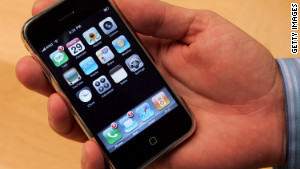
5 ways the iPhone changed our lives


Watch this video

On June 28, 2007, Nokia was the top selling mobile-phone company in the world, people stopped working when they left their computers, Android phones didn't exist, and high-powered executives were addicted to thumbing on their BlackBerrys.
The next day, Apple's first iPhone went on sale.
At $600, it was a luxury item at first. But five years later, the phone's dramatic impact can be seen in our daily lives, schools, factories and boardrooms. To date, more than 217 million iPhones have been sold, and they're being used by construction workers to read blueprints, doctors to diagnose patients, governments to improve services and parents to quiet their kids in restaurants.
To ring in its 5th birthday, here are five ways the iPhone has made a mark on the world.

 
2007: First iPhone announcement
T
he true cost of an iPhone

The original iPhone cost $600 or higher and came with only a handful of pre-loaded apps.

A new way of interacting with computers

In 2007, we were a nation of skilled texters, banging out OMG-filled coded messages at lightning speeds on numerical keypads and physical keyboards. The iPhone was lacking either of those, instead offering a nothing-but-screen keyboard.
It was a classic Apple move toward dead-simple usability, and it helped bring a slice of computing to a whole new audience, including technophobes, kids, senior citizens and people with visual or hearing impairments.
Suddenly, users could navigate their phones with a few swipes of the finger. Kids intuitively seemed to know how to use it. And the phone ushered in a new wave of touchscreen devices.
After the hefty price tag, the lack of a physical keyboard was the first complaint many reviewers lodged against the iPhone. It didn't scare off consumers, though, and Apple sold a million iPhones in less than three months. Typing speeds on the iPhone still may not rival a pair of BlackBerry thumbs at their peak, but predictive-text software, spell check and, later, cut and paste have made it a usable alternative.
In October, Apple tried to shake up input again with the introduction of the Siri voice-assistant feature. The voice-recognition technology encouraged users to speak commands and questions instead of of tapping them in on the screen.

The iPhone's killer feature was not that tough, expansive glass touchscreen. It was the mobile operating system, iOS, and the tightly controlled App Store released a year later in 2008 that made the iPhone into, well, whatever you wanted it to be.
The original device was useful enough: It shipped with a built-in Apple apps for checking the Internet, weather, e-mail, texts, stocks, calendars and the time. But when the App Store opened, people suddenly had access to a stockpile of well-designed third-party apps, and developers were able to build an astonishing variety of custom apps.
With the right app, an iPhone could track the sun, sync shopping lists, be a drum machine, take restaurant reservations, be a cash register. Meanwhile, Apple's TV ads made "there's an app for that" into a catchphase and a headline cliche.
In classic Steve Jobs style, Apple took complete control of the sales and app-approval ecosystem. Apps have to be approved by Apple before they can be sold, meaning fewer spam apps and viruses make it through to consumers. It also means the company can reject apps as it pleases -- say, when a feature competes with an Apple product -- to the occasional displeasure of the developer community.
The App Store has also created a new mini-economy. Apple has paid out more than $5 billion to developers, and that's after taking a 30% cut off all app sales for itself. Today, there are more than 650,000 mobile apps available in the App Store, ranging from free to $1,000 for specialized business applications.

24/7 Internet

The iPhone ushered in an age of all Internet, all the time. For better or worse, it's blurred the lines between work and home lives, made communication a round-the-clock habit and led to a host of new rules about when and how it's appropriate to use smartphones (not while walking, driving, playing trivia or on a date, please).
The phone, whose price soon dropped to $200 or less with a two-year wireless contract, gave users instant access to a multitude of ways to communicate: texts, e-mail, Twitter, Instagram, Grindr, Foursquare, Facebook, FaceTime. There's even a so-so phone on there. Mobile phones had limited Internet access before the iPhone, but the device's browser was a huge improvement, displaying webpages more like they actually looked on a desktop computer.
All this connectivity brought a new disorder: smartphone addiction. A recent study by gadget-resale site Gazelle found that 15% of respondents would rather give up sex than go without their iPhones for a weekend. That type of titillating stat is not surprising to anyone for whom the iPhone is the last thing they see at night and first thing they check in the morning.

Supply-chain activism

As Apple grew from underdog into the largest company in the world by market cap (it made $108 billion in 2011), its manufacturing chain was pushed to greater and greater limits -- and into the spotlight. The Foxconn plants in China that produce Apple's iPhones, iPads and other products were called out in the press and by activist groups for poor working conditions, long hours and low wages.
While bad press for Apple, the controversy drew much-needed attention to electronics supply chains. The Foxconn plant was called out for producing Apple products, although it also assembles products for other major electronics companies including Microsoft, Nintendo, Sony and Intel.
To quell the backlash, major tech companies are feeling the pressure and changing how they operate. When he took over as Apple CEO, Tim Cook agreed to allow a third party, the Fair Labor Association, audit its China factories and address any issues that were found. And just this week, Google unveiled a media-streaming device, the Nexus Q, which is made in the U.S.

An industry revived

The iPhone may have helped kill the BlackBerry, but it gave birth to a new beefed-up genre of mobile devices. Google went on to release its own more developer-friendly mobile operating system, Android. Microsoft threw its hat into the ring with Windows Phone OS. Most major mobile phone companies now produce touchscreen smartphones.
Some might say the iPhone and its cousin, the iPod Touch, helped spawn the larger iPad, with its identical touchscreen interface. That hit device was birthed in 2010 and quickly created a new gadget market, leaving rivals scrambling to catch up. Now Amazon, Google and Microsoft all have new or forthcoming tablets.
The iPhone's popularity as a portable gaming device -- oh, how we love flinging virtual birds at virtual pigs! -- also helped usher in a new era of mobile gaming.
Five years after the iPhone hit the market -- and the culture -- the tech industry as a whole is thriving and innovating. It probably won't be another five years before the next big thing shakes up technology again.

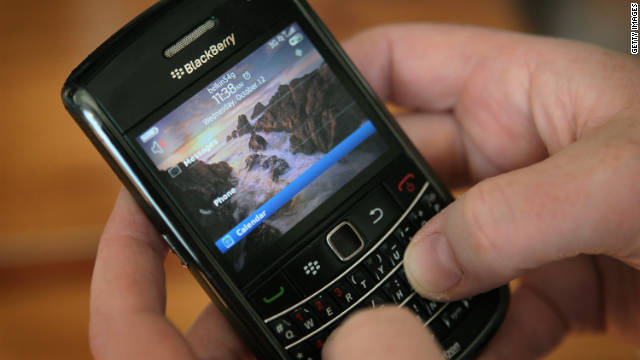
From CrackBerry to 'depressing': The BlackBerry's 5-year fall


Some BlackBerry fans still love them, but recent years have been tough for the once-dominant device.
Some BlackBerry fans still love them, but recent years have been tough for the once-dominant device

(CNN) -- Remember the CrackBerry?
Five years ago, the buzzing gadget was all the rage -- the rock star of mobile communication and seemingly every office drone's high-tech status symbol.
Sober-minded professionals talked about BlackBerry addiction and "phantom vibrations" that caused users to reach for the devices even when they weren't actually doing anything.
"It's like Pavlov's dog," B. Marc Averitt, a technology investor, told The New York Times in 2007, referring to the gut-level longing users felt for the click-clack of the phone's keyboard and humming notice that a new personal message had arrived.
Fast-forward to Thursday, and what was the word?
   

Photos: A visual history of the telephone

"Depressing. That's the only word that comes to mind after reading the RIM Q1 financial results press release and listening to the conference call," Chris Umiastowski wrote for the site CrackBerry, which emerged in 2007, eight years after BlackBerry's first two-way paging device was released.
"(But) as crappy as the results were, I'm not going to write up a death certificate for RIM here."
He didn't. And that shows that the folks who still love their BlackBerry still really love their BlackBerry. But let's be clear: Some analysts do say it's over for the BlackBerry.
"Anyone who's been paying attention isn't surprised by BlackBerry maker Research In Motion's recent collapse," a blogger for ReadWriteWeb wrote. "It's unfortunate, but it's been inevitable."
BlackBerry maker Research In Motion announced Thursday it is laying off 5,000 people -- and said earnings for the past three months were significantly less than expected, with the company reporting a first-quarter loss of $518 million. Sales were down 40% from last year. Furthermore, the new operating system it's pinning its hopes on will be delayed until next year, or, a full year after it was originally expected.
Couple all of that with more reports that the company might be looking to sell off its once dominant service, and you had what amounted to a devastating head-kick for the Canadian company. It capped off a gut-punch of a financial year that has seen RIM's stock price drop 70%.
So, what happened? As an even more gadget-obsessed society than we were five years ago, how did we stop being BlackBerry fiends.
Photos: Our mobile "addiction"
Well, how's this for cruel and cosmic irony? A day after the dismal report, something called the iPhone celebrated its fifth birthday.
You might have heard of it. About 217 million of them have been sold.
It may not have been the very first smartphone. But Apple made it sexy. And fun. And the BlackBerry, to many, would soon become the thing they give you at work.
"Apple's new iPhone could do to the cell phone market what the iPod did to the portable music player market: crush it pitilessly beneath the weight of its own superiority," Lev Grossman wrote for Time. "This is unfortunate for anybody else who makes cell phones, but it's good news for those of us who use them."
The guy has since written a book called "The Magicians." He must have had a crystal ball.
Critics say RIM was too slow to react. To be sure, it maintained (and, to some degree, still does) the hard-core business user more concerned about reliability and security than playing "Angry Birds." But for many, the thrill was gone.
By the time they brought a touchscreen BlackBerry to market, the second-generation iPhone 3G was already capturing hearts and minds.
And even the goal of becoming the "other smartphone" got further away when Google unleashed its Android operating system and opened it up to phone makers everywhere. The first Android phone, the HTC Dream, hit stores in October 2008, around the same time as the BlackBerry Thunder. Google's quicker response paid dividends, and now there are more phones running Android phones than there are iPhones.
Ditto all of the above for the BlackBerry Playbook, RIM's entry into the tablet market that, to be kind, failed to meet sales goals.
None of this, as CNNMoney notes, means your BlackBerry will be a useless brick in the near future. RIM still has 78 million subscribers and $2.2 billion in cash on hand.
But as a cultural icon, it's hard to see the magic of the mid-2000s returning for the BlackBerry. It's enough to make you want to tap out a condolence note for the company -- even if many of us will be doing so on a touchscreen.

Friday, June 29, 2012

Barclays settles allegations that it manipulated key lending rates

CFTC says scheme to manipulate rates was widespread at U.K. bank, including multiple traders and senior managers.

Fortune - U.K. bank Barclays agreed to pay $453 million to settle claims brought by U.S. and U.K. bank regulators and law enforcement officials that the bank participated in a scheme to fix two key lending rates, including the closely watched LIBOR, which affects as much as $350 trillion in loans and derivatives.
Of the $453 million paid by Barclays, $200 million was to the Commodity Futures Tradings Commission, which is the largest civil fine levied by that regulator in history. The bank agreed to pay another $160 million to settle charges brought by the U.S. Department of Justice, and nearly $93 million to the U.K. Financial Services Authority.

According to the settlements, Barclays bankers and traders regularly, and purposefully, misreported what it cost the bank to borrow money to an organization in London that tracks those rates. The settlement also says that Barclays colluded with other banks to manipulate their lending rates as well. The settlement says that the scheme was widespread at the bank, and included multiple traders on trading desks around the world. It also said multiple "senior managers" at the bank participated as well. No individuals were named in the settlements.
In a statement, Barclays CEO Bob Diamond said the conduct identified in the settlement did not meet the standards of his firm and that he and other top bank executives have volunteered to forgo their annual bonus for 2012. He said controls have been put in place to make sure similar actions don't happen again.
The CFTC settlement says the lending rate manipulation occurred over four years, and goes back as far as 2005, but intensified during the financial crisis. In late 2007 and 2008, the rate Barclays was being charged to borrow money began to rise. That fueled speculation that the bank was in trouble. As a result, according to the CFTC, senior bank officials told those responsible for reporting the bank's lending costs to submit a lower rate than the bank actually was paying. In late 2008, Tim Bond, who was Barclays chief strategist at the time, told Bloomberg television that he believed the overnight lending rates being reported by Barclays and others were made up.
It's not clear how much Barclays profited from the manipulation or how much it cost borrowers and others. Bank lending rates are used to calculate LIBOR, which is a key factor in other borrowing rates set by banks. For instance, many consumer lending rates, from those on home equity lines of credit to auto loans, are often based on LIBOR.
Banks also regularly sold derivatives to municipalities and pension funds based on LIBOR, and took the other side of those trades. According to the settlement, Barclays traders regularly coaxed bank officials to manipulate the lending rate they reported, sometimes up and sometimes down, in order to boost the value of their trades. Among the evidence the CFTC and others gathered against the bank include a number of e-mails in which traders appear to openly talk about the lending rate fixing scheme. For example, in one e-mail uncovered by the CFTC, a Barclays trader wrote to a submitter: "We have another big fixing tom[orrow] and with the market move I was hoping we could set [certain] Libors as high as possible."
Baltimore was sold as much as $300 million in LIBOR contracts. The city is the lead plaintiff in a class action against a number of banks, including Barclays. Baltimore's suit does not specify how much the city lost. But another case brought on behalf of beneficiaries of retirement accounts that owned LIBOR-based securities against a number of banks says the manipulation of the rate created "hundreds of millions, if not billions, of dollars in ill-gotten gains" for the banks.

"People taking out small business loans, student loans and mortgages, as well as big companies involved in complex transactions, all rely on the honesty of benchmark rates like LIBOR for the cost of their borrowings," says CFTC chairman Gary Gensler. "Banks must not attempt to influence LIBOR or other indices based upon concerns about their reputation or the profitability of their trading positions."
Regulators have been looking into allegations of LIBOR rate manipulation at Barclays and other banks for more than a year. Barclays is the first bank to settle charges, but Deutsche Bank has also disclosed that it has been the focus of investigations, and both banks have reportedly suspended dozens of traders related to the matter. Credit Suisse and UBS have also said that they are working with regulators on their LIBOR probes. CFTC officials thanked Securities and Exchange Commission officials in their press release, but declined to say whether the SEC would bring its own cases against Barlcays or other banks. CFTC officials also declined to say whether they would bring charges against individuals.

Thursday, June 28, 2012

Beckham Olympic dream over as left out of GB soccer squad

David Beckham's Olympic dream is over after the soccer star revealed he has not been included in the British squad for the forthcoming Games in his home city of London.
Coach Stuart Pearce has left the Los Angeles Galaxy midfielder out of his squad for the 16-team football competition, rejecting the chance to include the 37-year-old midfielder as one of his three players over the age of 23.
"Everyone knows how much playing for my country has always meant to me, so I would have been honored to have been part of this unique Team GB squad," Beckham said in a statement released via his representatives.
"Naturally I am very disappointed but there will be no bigger supporter of the team than me and like everyone, I will be hoping they can win the gold."
Beckham was part of Sebastian Coe's team which convinced the International Olympic Committee to grant London the right to host the Games for a third time in 2005.

 
Olympic rings on London's Tower Bridge
 
Christie puts Bolt through his paces
 
Female Saudi athlete: A dream come true
 
The former Manchester United and Real Madrid player was on a provisional 35-man list for the British squad, but Beckham insists he is still looking forward to the Olympics, which get underway on July 27, despite the snub.
"As a Londoner I was really proud to have played a small part in bringing the Olympics to my home town as part of Seb's team," he said.
"I can't wait for the Games to begin and enjoy every moment along with the rest of Great Britain."
Reports in the British media have suggested Beckham's Welsh former United teammate Ryan Giggs has been selected as one of Pearce's three over-age players, along with Liverpool's Craig Bellamy and Micah Richards of Manchester City.
The choice of Giggs, a midfielder, right-back Richards and forward Bellamy would provide Pearce would cover in all areas of his squad.
Beckham has not played international football since coming on as a substitute during England's 3-0 win over Belarus in 2009.
Football culture: Who are you? Warrior or tika taka technician?
His omission provoked surprise on social-networking site Twitter as well as criticism for Pearce, with former Premier League midfielder Robbie Savage, who played with Beckham in United's youth team, labelling the GB coach as "clueless".
Former England striker Gary Lineker added: "There are arguments for and against DB selection. What i don't understand though, is why string him along by including him in a short list?
"On another note... Will be brilliant to see Ryan Giggs finally have the opportunity to play in a major tournament."
Team GB has been drawn in Group A of the tournament, alongside Senegal, two-time champions Uruguay and United Arab Emirates.
Pearce's team will begin their campaign against Senegal at Giggs' home stadium Old Trafford on July 26.

Student journalist assaulted in Tahrir Square

Amid the celebrations that greeted the declaration of a winner in Egypt's first freely elected presidential vote, a British student journalist was sexually assaulted by a mob in Tahrir Square.
Natasha Smith recounted the experience on her blog and in an interview with CNN. Smith, who has since left Egypt, wrote that the moving demonstrations of freedom turned to horror "in a split second" when dozens of frenzied men dragged her away from two male companions and began to grope her "with increasing force and aggression."
"Men started ripping off all my clothes," she told CNN. "First of all, it was my skirt, and that just went straight away, and I didn't even feel my underwear being removed. Then my shoes went and clothes on my upper half were just being ripped off me, and that was quite painful."
During the assault, "I was just in this weird, detached state of mind, and I just kept saying, 'Please God, please make it stop. Please, God, make it stop.' "

 
UK journalist recalls Egypt sex assault
 
New Egypt pres. may pick female VP
 
Economic rebound in Egypt?
 
Her experience echoes the assaults faced by two prominent female reporters, CBS News correspondent Lara Logan and Egyptian-American columnist Mona Eltahawy, who has said her attackers were officers at a police station. One of Smith's friends, Callum Paton, told CNN the mob dragged Smith naked across the ground before another group of men stepped in to protect her.
Read Natasha Smith's account.
"There were several moments at which I thought she was going to die," Paton said. "And I think that really the fact that we are still alive, and especially Natasha's still alive, was because there were so many people who were willing to help us and were willing to risk their own lives and put them in direct danger to get her out of that situation."
Smith was on her first international assignment, shooting a documentary on women's rights in Egypt as her final college project. A doctor who treated Smith and a British Embassy official who met her at the hospital corroborrated her account for CNN.
"If there hadn't been a small group of men around me, I would have been raped and killed," she said. "That's just without question, because that's what the men were trying to do. It was very clear what they were trying to do to me. They weren't just trying to play around with me, they were gunning for me for whatever reason."
On her blog, she wrote that an ambulance pulled up at one point, but it was forced to leave when it "was invaded by tens of men." Even after being escorted to a medical tent by volunteers who formed a cordon around her, her attackers surrounded the tent. Women who assisted her told her the attack "was motivated by rumors spread by troublemaking thugs that I was a foreign spy, following a national advertising campaign warning of the dangers of foreigners."
"Arab women, Muslim women were all around me, just crying, saying 'This is not Egypt! This is not Egypt! This is not Islam! These are thugs!' " she told CNN. She said she responded, "I know, I love Egypt, I know this is not Islam, it's OK.
"And they were stunned, 'cause they thought I was going to be so full of hate and so full of fear. But from the very beginning, I don't blame Egypt for this. This is not the workings of the Egyptian people. This is not representative."
To escape, she said, "I was told I had to put my trust in this Egyptian man. I was disguised in a burqa and let out of this tent with this man, barefoot and I had to pretend to be his wife and walk through the streets and he kept just saying to me, 'Don't cry. Do not cry. If you cry, people will know.' "
On her blog, she complained about her treatment at the hospital, noting that the doctor's first question was whether she was married, "which is of course the most important question to be asking a victim of mass sexual abuse."
"He and a female nurse (who only reluctantly kept me covered up) looked briefly at the damage and just wandered off, saying that because I didn't have internal bleeding, they couldn't do anything," she wrote. "A useful trip, that was."
But the doctor, Mohammed Meligi, said Smith's account may be "a misunderstanding, because she was here first time to enter the Egyptian hospital."
Smith said her case will get attention "because I'm British and I'm young and I'm a girl," but she said other Egyptian women "will often suffer these attacks and worse attacks and there'll be no justice done."
"There's been an outpouring of support, and I'm so grateful for that," she said. But she said she wished that support could be shared with "all women, of all nationalities, wherever they are."
"I'll be so happy if this could make any difference to other women who are in this situation, not just in Egypt, not just in the Middle East, but everywhere," she said.

EEG brain trace 'can detect autism'

EEG
The researchers found 33 EEG patterns linked to autism


A simple brain trace can identify autism in children as young as two years old, scientists believe.
A US team at Boston Children's Hospital say EEG traces, which record electrical brain activity using scalp electrodes, could offer a diagnostic test for this complex condition.
EEG clearly distinguished children with autism from other peers in a trial involving nearly 1,000 children.
Experts say more work is needed to confirm the BMC Medicine study results.
Early detection There are more than 500,000 people with autism in the UK.
Autism is a spectrum disorder, which means that it is not a single condition and will affect individuals in different ways.
Commonly, people with autism have trouble with social interaction and can appear locked in their own worlds.
It can be a difficult condition to diagnose and can go undetected for years.
The latest study found 33 specific EEG patterns that appeared to be linked to autism.
These patterns consistently spotted autism in children across a range of age groups, spanning from two to 12 years old.
Hallmark brain activity The researchers repeated their analysis 10 times, splitting up their study group (children with a medical diagnosis of autism and children with no signs of autism) in different ways.
Around 90% of the time, the EEG patterns could correctly detect the children diagnosed with autism.
The team now plan to repeat their study in children with Asperger's syndrome - one particular subset of autism. Typically, people with Asperger's have higher-than-average intelligence and struggle less than people with other types of autism with their speech.
Dr Frank Duffy who is leading the investigation said the work could help determine if Asperger's should be thought of as an entirely separate condition.
And it could point the way to determining if younger siblings of children with autism are likely to develop the same condition themselves.
"It is a great cause of anxiety when an older sibling develops autism.
"EEG might offer a way to check for the same condition in younger siblings in advance of them having symptoms."
EEG could also be used to track what effect different autism treatments are having on the condition, he said.
Caroline Hattersley of The National Autistic Society said: "We welcome any research that may help us to understand autism better and improve diagnosis times for those with the condition.
"In a recent survey we commissioned, 50% of people with autism and their families said it was difficult to get a diagnosis and 55% said the process took too long.
"While further testing of EEG scans is still required, any tools that help identify autism at a younger age could potentially improve a person's quality of life by allowing the right support to be put in place earlier."

Wednesday, June 27, 2012

Dueling online over 'Call Me Maybe'


Facebook is supposed to help you connect with people, but sometimes it's not that easy.

 You have burning questions, and we have burning answers (we really need to stop writing these columns by candlelight). That's why, this week, we decided to take a passel of queries from our friends, followers and readers. We received these queries via e-mail, Facebook and in-person conversations. We spunked up the wording a bit to keep you healthily entertained.
Please excuse the myriad "Call Me Maybe" references to come. We hate ourselves, too.
So my friend recently posted about something really big in the news -- OK, how much he likes Carly Rae Jepsen's "Call Me Maybe," but, hey, that's big in MY world -- on Facebook. I saw this right before I was about to post something akin to, "Carly Rae Jepsen is obviously one of the four horsemen of the Apocalypse. It's only a matter of time until the Earth heaves its last metaphorical breath."
How can I create a post stating the exact opposite opinion to my friend's without sounding like a total tool who is passive aggressively jabbing at him "publicly"? And how can I do this WITHOUT having to be overly disclaimer-ish, state caveats, water down my thoughts, etc.?

 
Facebook: You've got new e-mail address
 
andberg named to Facebook board
 
Although we often warn y'all not to post tool-y stuff on your Facebook Timeline, what it comes down to is this: Your Timeline is your canvas on which you can post anything you please, and no one can stop you from opening the proverbial floodgates (unless, of course, you're violating Facebook's Community Standards in some way.)
If you are merely -- by happenstance -- sharing your disdain for the artist behind what is frighteningly deemed "the song of the summer" (can you tell that we share your derision?) at the same instance that your pal is drooling all over it, by all means, go ahead and let loose.
Only an overly sensitive (and paranoid) person would take a post on your Timeline about a (Canadian!) pop star as a direct affront to his taste.
However, if you are seeking to directly counter his point of view via your epistle, maybe include your friend in the post via tag -- in a constructive way. For example: "I am so not digging this jam. Why the eff is she throwing a wish in a well? @Kyle Franklin, what about the song gets you going so?" If your friend is cool, you might just inspire a pretty interesting dialogue.
Still, a recent study showed that those who use Facebook as an outlet to get out all their gripes are basically the bane of their "friends' " existence, so maybe you better save the rants about the Bieb's protégé for next time you consume an entire bottle of wine at your buddy's birthday party -- you know, before the tears start.
Out of politeness, I've accepted Facebook friend requests from any family members who have sent them. I didn't have the foresight to limit their ability to post on my wall, and now several of them -- namely an overzealous uncle and aunt -- have taken it over. What's the least controversial way to get them to stop?
There are a lot of fiddly ways to limit who can see what on your Wall and who can respond and blah, blah, blah.
Therefore, we can understand why you didn't safeguard your digital digs from your extended family. Luckily for you, there's a quick fix: Each time you go to post a kitten video or an inspirational quote or lyric from "Call Me Maybe" (You're totally the friend in the first letter. Admit it.) on your Timeline, click on "Friends," right next to "Post."
Scroll down to "Custom," and from there you can block specific people from seeing your Timeline post, and consequently littering it with inane comments. That should quell the tide of familial overfamiliarity for a while.
In the meantime, maybe plan a visit or pick up the phone or something. It seems like your aunt and uncle miss you. Or are shut-ins. Either/or.
Recently, a friend whom I see quite often sent me a Facebook message reading: "I think we're growing apart." I'm kind of appalled, considering we see each other every few weeks and e-mail and whatever a lot during the day -- also, Facebook message? Are we 14 here?
Maybe he's pissed because I finally have a girlfriend? Who knows. Anyway, how do I answer this? Via Facebook message? E-mail? Phone? Carrier pigeon?
Wow, your friend is lame. Or just really, really cowardly. If -- with the knowledge that your friend is lame and cowardly -- you still want to keep the friendship alive and high-steppin', might we suggest, and this is crazy, pulling up his number and calling him maybe?

Judge stops U.S. sales of Samsung Galaxy Tab 10.1


A U.S. district judge has approved Apple's request for a preliminary injunction against Samsung's Galaxy Tab 10.1.U.S. District Judge Lucy Koh has approved Apple's request for a preliminary injunction in the U.S. against Samsung's Galaxy Tab 10.1.
"Although Samsung has a right to compete, it does not have a right to compete unfairly, by flooding the market with infringing products," Koh wrote on Tuesday.
Apple filed a motion for a preliminary injunction in May 2012, claiming Samsung's Galaxy Tab 10.1 infringes on an iPad-related patent. Apple has also filed a similar motion against Samsung's Galaxy S III in June.
The judge's order becomes effective after Apple posts a $2.6 million bond as protection against damages suffered by Samsung if the injunction is later overturned.

 
The Number: Samsung the new Apple?
 
It's important to note, however, that this ruling only affects Samsung's older 10-inch tablet, the Galaxy Tab 10.1. It does not affect the updated Tab 10.1 II, which was unveiled in May 2012.
According to an IDC report from March 2012, Apple's iPad had a 54.7% market share in Q4 2011 while Samsung, which sells several tablet models, had a 5.8% share in the same period.
Samsung, which has already appealed (PDF link) the decision, said it doesn't expect this ruling to have a big impact on its business.

Shhh! Tennis battles to shunt the grunters


World No. 4 Maria Sharapova has long been known for her on-court shrieks and the Russian has recently attracted criticism as a result. The three-time grand slam champion claimed she will continue to make the noises until they are outlawed.

It's something the world's two leading female tennis players have in common, and it's not the grand slam titles both Wimbledon top seed Maria Sharapova and No. 2 Victoria Azarenka have to their names.
Both stars have earned reputations as grunters, with Sharapova's screams puncturing the usual calm of London's All England Club on day one of the annual grass-court grand slam.
But tennis' rule makers have set in motion a chain of actions which could make baseline bellows a thing of the past, including the introduction of a device to monitor on-court noise levels and possible steps to sanction excessive shouts.
Death of a tennis art: Is this the end for serve and volley?
"The WTA, ITF, and grand slams aim to drive excessive grunting out of the game, while ensuring that we do not drive our current generation of players -- who were taught to play this way -- out of the game," read a WTA statement.

 
Janko Tipsarevic's goal for Wimbledon
 
Kvitova and Navratilova's Wimbledon
 
"This is a start of a sport-wide plan responsibly dealing with the issue through player education and objective rule changes."
While the body which governs women's tennis is eager to eradicate unnecessary shrieks, the organization is also cautious of negatively impacting current stars whose games have developed in a certain manner.
"It's time for us to drive excessive grunting out of the game for future generations," WTA CEO Stacey Allaster told USA Today.
"What is clear from experts is that it would have a clear, damaging effect on performance of the existing generation.
"It's going to take some time. I don't want to get ahead of ourselves because it's a collective effort of the sport and we need everyone to buy in."
Allaster said significant research needs to be conducted before any rule on noise could be formally introduced, and she stopped short of describing the device, which is still in development, as a "grunt-o-meter."
"The bottom line is that we want to bring forward across all levels of competition an objective rule through use of technology to make it much easier for athletes and chair umpires," she said.
"What is too loud? What is too long? We need to give the official an objective measurement tool.
"Can you imagine on a critical point an umpire going, 'Oh, I thought you were too loud.' You have to take all of that out of the equation. It's not fair to athletes, the chair or the sport."

Colorado wildfire of 'epic proportions' displaces 32,000; tests firefighters


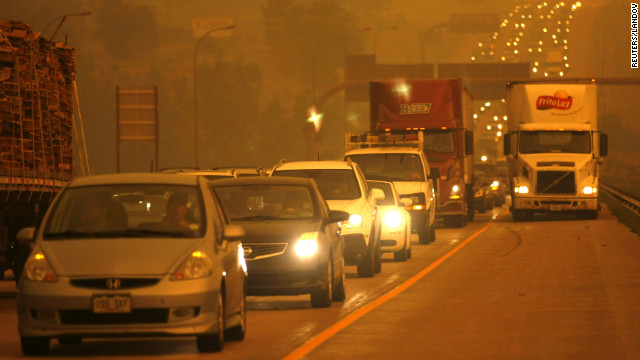
Smoke from the Waldo Canyon Fire engulfs Interstate 25 north of Colorado Springs, Colorado, as the blaze burns out of control Tuesday, June 26. The 6,200-acre Waldo Canyon Fire has caused 32,000 residents to be evacuated. At least six other fires are active in Colorado.


Predicted thunderstorms could complicate efforts Wednesday to tame an explosive wildfire that has already chased some 32,000 residents from their homes near Colorado Springs, Colorado.

The fire doubled in size overnight and by Wednesday morning, 15,324 acres were burning with only 5% contained, said Rich Harvey, incident commander of the Waldo Canyon Fire.
"You saw yesterday as bad a fire behavior as you are going to see anywhere, anytime," he said, referring to extremely dry, hot and windy conditions. "We expect further trouble from the weather today."
Thunderstorms seem like a good thing in the midst of hot, arid conditions, but they bring with them strong winds that can gust in any direction. "That will make work for firefighters more difficult," Harvey said.
Open Story: iReporters share their harrowing views of the western wildfires

 
Colorado wildfires force evacuations
 
Evacuee: Wildfire 20 feet from home
 
Evacuees watch and hope homes remain
 
'Smoke plume was coming toward us'
 
Winds gusting to 65 mph through mountain canyons blew the wildfire through containment lines into northwest Colorado Springs on Tuesday afternoon.
Richard Brown, the Colorado Springs Fire chief, described it as a "firestorm of epic proportions."
Gov. John Hickenlooper surveyed the Waldo Canyon Fire, telling reporters it was a difficult sight to see.
"There were people's homes burned to the ground. It was surreal," he said late Tuesday night. "There's no question, it's serious. It's as serious as it gets."
Becky Schormann has nervously listened to news reports since Saturday, the day the fire started, prompting her to evacuate the area with her husband.
She hoped her home would be spared.
The family managed to take some sentimental items with them when they left, but still had to leave behind a boat, a pair of ATVs, a China cabinet and an antique doll collection.
"I keep telling myself: It's going to be okay," she said.
Schormann told CNN that flames came to within 20 feet of their home but were beaten back.
"Our volunteer fire department is just awesome," she said.
The Schormanns are staying in an RV at their daughter's home. The family's two dogs, a pony and a donkey also came along for the ride.
The flames from the same wildfire also are dangerously close to the U.S. Air Force Academy campus. An evacuation order has been issued for about 700 residents in its Pine Valley Housing and 1,400 in Douglass Valley Housing, said public affairs officer John Van Winkle.
The academy's powered flight, glider and parachuting operations have been called off since Saturday so that the U.S. Forest Service could use runways for helicopters used to fight fires along Colorado's Front Range, Van Winkle said.
The academy's Class of 2016, all 1,045 cadets, will arrive Thursday.
"The fire conditions could not be worse," said Anne Rys-Sikora, spokeswoman for a multi-agency fire response team. "It is like a convection oven out there."
Colorado Springs set a record high of 101 on Tuesday as firefighters contended with brutal conditions, including ash falling on highways and neighborhoods. Officials rushed in crews and aerial equipment in a bid to slow the fire.
The forecast stays hot and dry for the foreseeable future, with daytime highs not falling out of the 90s until early next week, according to the National Weather Service.
Dave Barjenbruch, a meteorologist with the National Weather Service office in Boulder, said the past week has been hellish across Colorado.
"Even in the foothills, where most of the fires are going on, most days have been in the single-digit humidity," he said.
Meanwhile, a new fire in Boulder, northwest of Denver, prompted pre-evacuation notices to 2,300 phone numbers.
Six other wildfires were active in the state, according to the Colorado Division of Emergency Management.
The largest of the fires was the High Park Fire, which began June 9 and has now consumed 87,284 acres, the U.S. Forest Service said. It was 65% contained Tuesday. The total number of homes lost rose to 257. An estimated $33.1 million has been spent trying to contain the blaze.
The Federal Emergency Management Agency authorized the use of federal funds to help fight the Waldo Canyon Fire after Colorado Springs and surrounding El Paso County declared an emergency, which allows them to receive state and federal aid.
A large section of neighboring Utah was under a red-flag warning, with at least three wildfires burning Tuesday.
Authorities said they found the body of one person after they entered the evacuated areas of the Wood Hollow Fire, about 30 miles south of Provo. The victim had not been identified, according to the Sanpete County Sheriff's Office
FEMA is providing funds to help fight the Wood Hollow Fire, which has grown to 46,190 acres since starting Saturday afternoon. Containment was 15%.
West of Provo, the Dump Fire stood at 5,007 acres and was 100% contained, officials said.

Nora Ephron, prolific writer and filmmaker, dies at age 71

Nora Ephron poses for a portrait in her home in New York on November 3, 2010. Nora Ephron, the screenwriter and director whose sharp, edgy romantic comedies featuring strong women took her to the top ranks of a film industry mostly dominated by men, has died.
She was 71.
Ephron died Tuesday surrounded by relatives at a New York hospital, where she was undergoing treatment for acute myeloid leukemia, her family said in a statement.

She wore many hats: essayist, playwright, journalist, novelist, an Oscar-nominated screenwriter and a movie director.
An accomplished screenwriter, her romantic comedies featured strong but appealing characters who tackled relationship issues with a comic insight into their situations.
They included box office hits "When Harry Met Sally" and "Sleepless in Seattle," both of which earned her screenwriting Oscar nominations.
Ephron mourned as 'brilliant' writer, humorist

 
Writer Nora Ephron dead at 71
She also received an Oscar nomination for "Silkwood," the story of anti-nuclear activist Karen Silkwood.
"An amazingly talented girl who was able to accomplish everything she set her mind to with great style and will be missed enormously," actor Martin Landau said in a statement.
Ephron also wrote and directed "Julie & Julia," which earned Meryl Streep a best actress Oscar nomination in 2010.
"What a loss. A magnificent spirit and voice. She changed romantic comedy forever," actress Debra Messing said.
Ephron was born on May 19, 1941, into a family of writers.
Her parents, Henry and Phoebe Ephron, wrote screenplays for "Carousel," "Desk Set" and "There's No Business Like Show Business."
From the archives: Nora Ephron's best advice
While her parents' works live on through movie rentals and classic film channels, perhaps the elder Ephrons' true legacy is their daughters.
Nora Ephron made her directorial debut with the 1992 comedy, "This Is My Life," which she co-wrote with her sister, Delia.
Both sisters also put together a production fashioned around Ilene Beckerman's best-selling book "Love, Loss and What I Wore."
Ephron believes her parents' humor was a big part of her productions.
"They were funny and they believed that everything was copy," Ephron said in 2009. "They believed that anything in life could be turned into a story, which is really the first rule of humor. I don't think you can get through almost anything without humor."
She married screenwriter Nicholas Pileggi in 1987, eight years after she divorced investigative reporter Carl Bernstein. Her failed marriage to Bernstein was the basis of her book and movie, "Heartburn."
From the archives: A story told through clothes and Ephrons
"I feel bad for the people who don't at some point understand that there's something funny in even the worst things that can happen to you," Ephron said.
New York City Mayor Michael Bloomberg said Ephron's stories set in his city are classics.
"You've Got Mail" and "Sleepless in Seattle," her romantic comedies starring Tom Hanks and Meg Ryan, were among her movies that featured a lot of the city's iconic buildings as a backdrop.
"The loss of Nora Ephron is a devastating one for New York City's arts and cultural community," Bloomberg said in a statement. "From her earliest days at New York City's newspapers to her biggest Hollywood successes, Nora always loved a good New York story, and she could tell them like no one else."
In addition to making movies, Ephron also tackled writing in many other forms. Her essays include "I Remember Nothing" and "Crazy Salad." She also wrote the 2002 play, "Imaginary Friends."
Three years ago, Ephron provided a list of some of the best advice she's ever got.
It included "life is too short" and "location, location, location," an appropriate sentiment for a director whose romantic comedies focused on seizing the moment in major metropolitan cities.

TV station in Syria bombed; report finds growing 'contours of an insurrection'


Watch this video
Bombers killed at least seven people at a pro-regime Syrian satellite channel Wednesday, the government said, as world diplomats were making another try at ending the violence raging across the country.
"Terrorists planted explosive devices" in the headquarters of al-Ikhbaria, located near Damascus, killing three journalists and four security guards, the state-run Syrian Arab News Agency reported. The attackers also ransacked and destroyed studios, the news outlet said.
"The massacre won't go unpunished," Information Minister Amre al-Zoubi said.
The regime of President Bashar al-Assad has accused foreign media of conspiring against the country and said al-Ikhbaria works to counter the "sinister campaign." But observers say al-Ikhbaria is a mouthpiece for the government's propaganda, refusing to acknowledge the regime's brutal violence on dissidents seeking freedom.
 
Tensions rise after Syria downs jet
 
Turkey says Syria fired at second plane
 
NATO, Turkey slam Syria over downed jet
 
Syrians afraid of the unknown

The bombing comes a day after al-Assad said his restive country is in a "state of war" and as United Nations and Arab League envoy Kofi Annan scheduled a meeting of top diplomats Saturday in Geneva, Switzerland, to tackle the conflict.
Turkey hardens military position after Syria downs jet
After more than 15 months, unrest in the Arab nation shows no sign of receding. Internationally, tension was jacked up after Syria shot down a Turkish jet last week, an act deplored by NATO and many Western nations. At least 35 people were killed in nationwide violence Wednesday, the opposition Local Coordination Committees of Syria said.
The diplomats want to address an environment in which, according to a U.N. report published Wednesday, new rebel groups are emerging and fighters are making strides and gaining potency.
"The situation on the ground has dramatically changed in the last three months as the hostilities by anti-government armed groups each day take on more clearly the contours of an insurrection," said the report, issued by the Independent Commission of Inquiry on the Syrian Arab Republic.
"As a result of the estimated flow of new weapons and ammunitions, both to the government forces and to the anti-government armed groups, the situation risks becoming more aggravated in the coming months. The international community must not fail to implement a concerted effort to put an end to the violence."
The United Nations and other entities tracking the conflict in Syria noted the increasing clout of anti-government forces in past months.
The report cites this trend, saying rebel "operations in some locations are improving in efficiency and organization."
The fighters are expanding across Syria and fighting government forces on several fronts. The groups are engaging with government forces in "direct combat" and are attacking military and security facilities, the report said.
"Their increasing capacity to access and make use of available weapons has been demonstrated in recent weeks," the report said.
It said rebels haven't gotten "new or more sophisticated weaponry." But they are using improvised explosive devices "against army and security convoys, patrols and facilities such as military buildings and checkpoints."
"In at least one case, this has led to collateral damage among civilians and their properties. According to reliable sources, anti-government armed groups have also been using IEDs in assassinations, targeting government officials and individuals from the army and security forces."
The report said rebel forces "have effectively challenged" the regime's authority in Damascus, Homs, Hama, Idlib and Aleppo provinces.
For example, it said, the government forces' control of the country's borders has been regularly undermined, and cross-border movements of refugees as well as of anti-government fighters appear to be more frequent and fluid.
Can Turkey force U.S. and other NATO countries to attack Syria?
Burhan Ghalioun, former president of the opposition Syrian National Council based in Turkey, said he slipped over the border into Syria on a brief visit to Idlib province, and described rebel resolve and bravery amid a moonscape of destruction.
"The spirits of the fighters are very, very high," he told CNN. "They are ready to die for their freedom. The major problem that the fighters are facing is the nonstop bombardment by planes and tanks. This is making the battle difficult as the rebels don't have heavy weapons. Many cities and towns are already liberated. I was driven around Idlib in a car with a banner saying 'The Free Syrian Army.'"
Many observers say the rebel fighting forces have been too autonomous and have lacked central command. Ghalioun said they are "very united" and "cooperating among themselves."
"Despite that, there is no serious arming; the rebels are gathering arms from the attacks and battles they do with the regime forces," he said. "They are so organized on the ground, they have formed committees to help each other; medical, social, political, etc. I am simply amazed."
The Commission of Inquiry is probing the killings last month of more than 100 people in the Houla region -- where most of those slain in the massacre were reportedly women and children -- but has been limited because it hasn't gotten access to the country. It has had to conduct interviews with people by telephone or in the countries to which they fled.
So far, it said, it can't rule out, "with the available evidence," the possibility that perpetrators include pro-government militias, rebels, or foreign groups. But, it said, "forces loyal to the government may have been responsible for many of the deaths."
Many observers believe the Houla killings may have resulted from sectarian violence. Houla refers to three towns with a majority Sunni population. They are ringed by Shiite and Alawite villages. Most Syrians are Sunni and the opposition has a lot of support from them. The government is dominated by Alawites, an offshoot of Shiism.
"Where previously victims were targeted on the basis of their being pro- or anti-government, the (Commission of Inquiry) has recorded a growing number of incidents where victims appear to have been targeted because of their religious affiliation," the report said, describing conditions across Syria.
The commission said special envoy Annan's peace initiative "offers the best framework for a resolution of the conflict" and Annan's Saturday meeting of the Action Group for Syria will work on steps to implement his six-point peace initiative.
Annan said Wednesday he invited the top diplomats of the five permanent members of the Security Council -- China, France, Russia, the United Kingdom and the United States -- and Turkey. United Nations, European Union, and Arab League envoys also were invited.
The Action Group for Syria should "agree on guidelines and principles for a Syrian-led political transition that meets the legitimate aspirations of the Syrian people; and agree on actions that will make these objectives a reality on the ground," Annan said. "I look forward to a productive meeting this weekend, where we can all agree on concrete actions to end the cycle of violence and bring peace and stability to the Syrian people."
U.S. Secretary of State Hillary Clinton will be attending the meeting. Speaking in Helsinki, Finland, she said if participants can meet on the basis of a road map to a political transition in Syria, "then a meeting makes a lot of sense" and "could be a turning point." A strong transition road map backed by Russia and China, which have so far blocked tough action against Syria, would be a strong message to the al-Assad regime, she said.
Annan wanted to invite Iran to the meeting, but the United States opposed that, noting Tehran's support for al-Assad's forces.
The United Nations estimates more than 10,000 people have been killed since the Syrian crisis began in March 2011. Opposition activists say the death toll has topped 15,000, mostly civilians. About 1.5 million Syrians "are in need of urgent humanitarian assistance," said Jean-Marie Guehenno, U.N.-Arab League deputy envoy to Syria.