"Wellcome To Our All News Update Website"

"All News Updates Is The Greatest News Based Web Site, This Website Provides : All Kinds Of News That Means All News Updates"

"Sport News"

ICC World Twenty20 2012 - groups

"Entertainment"

Australian-born, London-based artist Ralph Heimans' new official portrait of Her Majesty The Queen, has been unveiled at the National Portrait Gallery in Canberra, Australia.

A New Smartphone App

A new smartphone app aims to provide a cheaper alternative to ultrasound in Africa by bringing an old technique into the 21st century.

Can you build a human body?

We will meet a woman deciding whether to have her hand cut off for a bionic replacement and analyse the potential to take the technology even further, enhancing the body to superhuman levels.

Showing posts with label Europ. Show all posts

Sunday, July 01, 2012

Turkey scrambles F-16 jets on Syria border

Turkish F-16 military jet seen at Incirlik air base in 2003 (file image)
F-16 jets from Incirlik airbase were sent to the border on Saturday, the army said


Turkey has scrambled six F-16 fighters jets near its border with Syria after Syrian helicopters came close to the border, the country's army says.
Six jets were sent to the area in response to three such incidents on Saturday, the statement said, adding that there was no violation of Turkish airspace.
Last month, Syrian forces shot down a Turkish jet in the border area.
The incident further strained already tense relations between former allies.
Turkey's government has been outspoken in its condemnation of Syria's response to the 16-month anti-government uprising, which has seen more than 30,000 Syrian refugees enter Turkey.
On Friday, Turkey said it had begun deploying rocket launchers and anti-aircraft guns along the border in response to the downing of its F-4 Phantom jet on 22 June.
Map
The move came after Prime Minister Recep Tayyip Erdogan warned that Turkey had changed its rules of military engagement and would now treat any Syrian military approaching the border as a threat.
Syria said the Turkish F-4 was shot down by air defence fire inside its airspace. Turkey insists it was downed by a missile after briefly entering and the leaving Syrian airspace.
The plane crashed in the Mediterranean, off the coast of the southern province of Hatay. Its pilots are still missing.
Nato support Mr Erdogan spoke of Turkey's "rage" at the incident and described Syria as a "clear and present threat".
Nato condemned the attack and voiced strong support for Turkey, after Ankara invoked Article 4 of Nato's founding treaty, which entitles any member state to ask for consultations if it believes its security is threatened.
Four of the six jets were scrambled on Saturday from the airbase of Incirlik in response to two occasions of Syrian helicopters flying close to Hatay province, Sunday's army statement said.
Later, two more F-16s took off from a base near Batman, in southeastern Turkey, after Syrian helicopters were spotted close to the province of Mardin, it added.
The military said the helicopters flew as close as 6.5km (4 miles) to the border, according to the AP news agency.

Maintaining a royal household costs a princely sum

The Duke and Duchess of Cambridge
It's been a busy year for the British royal family. The Prince of Wales and the Duchess of Cornwall alone covered almost 48,000 miles to undertake 804 official engagements between April 2011 and the end of March this year. So who pays the bills?
Prince Charles' office at Clarence House released its annual review Friday, shedding light on how money is spent on the couple, as well as Princes William and Harry and, of course, the newest addition to the family, Catherine, Duchess of Cambridge.
As the queen's eldest son, Charles, Prince of Wales, is mostly funded by the Duchy of Cornwall, a private estate consisting of more than 200 square miles of agricultural, commercial and residential land mostly in southwest England.
In the 2011-12 fiscal year, the prince's private income from the duchy rose by 3% to slightly more than $28.5 million. He received an additional $3.42 million in public funding from Parliament and government departments, a year-on-year increase of 11.8%.
With more private and public income, Prince Charles' household spending increased by 4.1% to $15.3 million, and all 135 full-time staff members received a pay raise of 3%. Nine of those employees work for Princes William and Harry, and for Catherine, Duchess of Cambridge.
So what is the expense of the royal family's newest member?
"It's actually quite minimal," said Prince Charles' communications secretary, Paddy Harverson, "There's been quite a lot of focus on things like clothes but actually, when you look at the numbers, it's mostly absorbed into the existing expenditure."
A royal aide added that it would be "rather impolite" to disclose how much money had been spent on the dresses that hit front pages of newspapers around the world every time Catherine steps out in public. What we do know, though, is that Prince Charles pays for his daughter-in-law's outfits for official engagements out of his private income.
Anti-monarchy groups such as Republic have criticized the royal family for using public money to travel. "Prince Charles gives little back to the country yet has a deeply held sense of entitlement when it comes to accessing public funds," Chief Executive Graham Smith said Friday. "We believe time is long overdue that the government brought royal spending under proper control."
However, Harverson maintains: "Members of the royal family do a huge amount of work. ... We really feel it's fantastic value for money. As it happens, 90% of it is his (Prince Charles') own income, so it's not coming from central government coffers."
Royal aides champion the continued success of the prince's group of 16 charities as the greatest example of the royal family giving back to the public. Between April 2011 and the end of March this year, the Prince of Wales directly or indirectly raised more than $200 million for his charities, which support young people, the environment and enterprise.
After last year's royal wedding and the recent Diamond Jubilee celebrations, polls have showed that the British royal family is as popular as ever. Riding high on that wave is the household of the Prince of Wales, as exemplified by the 76,825 letters received from the public in 2011-12. That is more than double the mail from the previous year.

European leaders reach key deal on banks


Watch this videoEuropean leaders reached a "breakthrough" deal early Friday to ease the recapitalization of struggling banks that should help draw the eurozone back from the brink of a gathering crisis.
Under the deal, European leaders agreed to create a single supervisory body to oversee the eurozone's banks which could use the single currency area's rescue funds, the European Financial Stability Facility or European Stability Mechanism, to aid banks directly without adding to governments' debt.
European Union leaders are hoping for implementation of the agreement by July 9, an EU statement said.
The deal means Spain's formal request this week for eurozone bailout funds to recapitalize its troubled banking sector will not add to its sovereign debt. Madrid had feared the increased debt load would send its borrowing costs even higher.


The debate over a more federal Europe

 
nlocking China's business potential

 
Eurozone crisis impact on the Mideast 
 
Ireland, which hopes to rework the terms of its bailout deal, and Italy, which like Spain is battling with spiraling government borrowing costs, could also benefit from the new deal.
European Council President Herman van Rompuy announced the agreement, seen as a concession by German Chancellor Angela Merkel, after a marathon late-night meeting in Brussels, Belgium.
"We agreed on something new, which is a breakthrough, that the banks can be recapitalized directly in certain circumstances," he said.
"The most important condition is that we have to put in place a single supervisory mechanism and second decision is that we are opening the possibilities to countries who are well behaving ... to make use of financial stability instruments ESFS, ESM in order to reassure markets."
The deal is a big step toward a closer banking union across the 17-nation eurozone, which could be seen as a precursor to fiscal union.
European markets responded positively to the news Friday morning and the euro currency strengthened appreciably.
"It is imperative to break the vicious cycle between banks and sovereigns," the eurozone leaders said in a statement.
Their proposals should be considered "as a matter of urgency" before the end of the year, the statement said.
The single supervisory mechanism would be in "compliance with state aid rules, which should be institution specific, sector-specific or economy-wide and would be formalized in a Memorandum of Understanding."
EU Commission President Jose Manuel Barroso said it was a "very ambitious decision that shows, once again, the commitment of the member states, namely those in euro area, to the irreversibility of the euro, and I think this will be recognized by all."
Irish Prime Minister Enda Kenny welcomed the new deal, saying Ireland's bailout debt could be "re-engineered," reducing the burden on taxpayers.
He said the agreement represented a "seismic shift" in EU policy.
The establishment of a single supervisory body should mean that recapitalization rules are better enforced across the eurozone, helping to restore investor confidence and stability.
This may reassure Germany, which had been opposed to the introduction of new short-term rescue measures.
The agreement also states that financial support to Spain's banks will be funded by the EFSF until the new bailout fund, the ESM, comes on line next month. It will then be transferred to the ESM but official lenders won't have "seniority" status, which would have put them ahead of private sector creditors.
French President Francois Hollande said the meeting of the 17 eurozone heads of state, held after the leaders of the EU countries outside the single currency area had left, was the result of pressure from Spain and Italy quickly to find short-term measures to stabilize the markets.
The euro has been badly shaken by more than two years of constant crisis, which in turn has sent reverberations through global markets.

Friday, July 29, 2011

"Sara Payne 'on phone-hack list'"

The mother of murder victim Sarah Payne has been told she may have been the victim of phone hacking, her charity has said.

Police told Sara Payne her details were in notes compiled by private detective Glenn Mulcaire, who was used by the News of the World, which championed her Sarah's Law child protection campaign.

The Phoenix Chief Advocates charity says Ms Payne is "devastated".

The paper's owner News International said it was "deeply concerned".

According to a report in the Guardian, the evidence uncovered by police in Mulcaire's notes is believed to relate to a phone given to Ms Payne by the NoW's then-editor Rebekah Brooks "as a gift to help her stay in touch with her supporters".

The BBC has not been able to confirm whether the evidence does relate to this particular mobile.

But Mrs Brooks, who left her role as News International chief executive in the wake of the hacking scandal but denies having had any knowledge of the practice while at the paper, says the phone "was not a personal gift".

In a statement, she said: "These allegations are abhorrent and particularly upsetting as Sara Payne is a dear friend.

"For the benefit of the campaign for Sarah's Law, the NoW have provided Sara with a mobile telephone for the last 11 years...

"The idea that anyone on the newspaper knew that Sara or the campaign team were targeted by Mr Mulcaire is unthinkable. The idea of her being targeted is beyond my comprehension.

"It is imperative for Sara and the other victims of crime that these allegations are investigated and those culpable brought to justice."

A source close to Mrs Brooks says she believes the voicemail system on the phone provided by the NoW was not activated until 18 months ago.

In such circumstances, it would be difficult for prosecutors to prove that any voicemail interception took place.

The Metropolitan Police's Operation Weeting is investigating claims of phone hacking at the paper, which was shut down earlier this month after it emerged that the phone of murder victim Milly Dowler may have been hacked.

It has also been revealed that the families of 7 July 2005 London bombing victims and dead service personnel may have been targeted by Mulcaire, who was jailed in 2007 for hacking into the phones of royal aides for the NoW.

 However, in the early part of the decade, Mulcaire had not signed his exclusive deal to supply the NoW and worked for other newspapers.

Ms Payne had previously said she had been told she was not a potential victim of phone hacking.

But in a statement, the Phoenix Chief Advocates charity said: "Whilst it was previously confirmed by 'Operation Weeting' that Sara Payne's name was not on Private Investigator 'Glenn Mulcaire' list, it has now been confirmed by the 'Operation Weeting' that Sara's details are on his list.

"Sara is absolutely devastated by this news, we're all deeply disappointed and are just working to get her through it.

"Sara will continue to work with the proper authorities regarding this matter, there will be a further statement in due course, but at this point in time, she (or we) can make no further comment."

The Guardian says detectives contacted Ms Payne after discovering notes made by Mulcaire that had previously been thought to relate to a different target.

News International said it "takes this matter very seriously and is deeply concerned like everyone".

A spokesperson added: "As the facts are established, the company and the independent management and standards committee will take all appropriate actions, including cooperating fully with any potential criminal inquiries or civil proceedings which may arise."

Committee hearing

Ms Payne became a campaigner for the right of parents to know if paedophiles were living in their area after her eight-year-old daughter Sarah was murdered by paedophile Roy Whiting in Pulborough, West Sussex, in 2000.

The NoW championed her campaign for the introduction of Sarah's Law.

In the final edition of the NoW on 10 July, Ms Payne wrote a farewell column for the paper, describing its staff as "my good and trusted friends" and the publication as a "a force for good".

Conservative MP Therese Coffey, a member of the culture, media and sport committee, said: "This is another dark chapter in this ongoing saga and I can't imagine the stress Mrs Payne is going through right now."

The committee has heard evidence from Mrs Brooks, News International chairman James Murdoch, and Rupert Murdoch, chairman of parent company News Corporation, all of whom denied knowing about the extent of the phone-hacking allegations at the paper until late 2010.

She said the MPs were meeting on Friday and could choose to reopen its inquiry and call further witnesses.

Labour MP Tom Watson, also a committee member, said: "I didn't think it could get any worse than it did with Milly Dowler, but poor Sara Payne tonight. She must be wondering who her friends are.

"It must be absolutely appalling to have heard this and my heart goes out to her."

And Mr Watson told BBC Two's Newsnight programme that he will ask the committee to recall James Murdoch, ex-NoW editor Colin Myler and the paper's former legal manager Tom Crone to give more evidence.

The committee is due to hold an internal meeting, which will be closed to the public, on Friday.

Lib Dem media spokesman Don Foster said: "Rebekah Brooks warned of more to come, but this marks an unimaginable new low.

"BSkyB's board must now reconsider their unanimous support for James Murdoch, and those complicit in these terrible actions must be brought to justice."

Meanwhile, the judge leading the public inquiry into phone-hacking says he will use his powers to demand evidence from witnesses "as soon as possible".

Lord Justice Leveson said he would also invite all editors, journalists and media owners to flag up what they saw as "inappropriate" practices.

"Nato takes over Kosovo border posts after clashes"

Nato has deployed peacekeepers in the north of Kosovo after a border post with Serbia was burnt down and a Kosovo policeman killed.

Serbian nationalists in Kosovo attacked the post on Wednesday after Kosovo's government sent police to enforce a ban on imports from Serbia.

Border posts in the area, which rejects Kosovan independence from Serbia, had been staffed by ethnic Serb police.

Kosovo's government suspected them of turning a blind eye to banned imports.

Nato officials said only small vehicles were being allowed through two border posts at the centre of the dispute, and that they were being checked for weapons.

Serbia has also reinforced police on its side of the border, to prevent "extremists from Serbia going to Kosovo", Serbian police chief Milorad Veljovic told Reuters news agency.

Wednesday's violence was the worst in several months, according to the BBC's Mark Lowen in Belgrade, Serbia.

It began when a group of about 200 Serbian nationalists approached the Jarinje crossing, throwing firebombs.

They forced the Kosovan police and customs officers, and the EU police assisting them, to flee across the border into Serbia.

The post was burnt down and bulldozed.

One of the Kosovan police officers was killed and several others wounded when they were shot at.

The move by Kosovo's Prime Minister Hashim Thaci to reassert Pristina's control over the region has been criticised by the EU and the US as provocative.

The region has not accepted the mandate of the Pristina government since Kosovo's ethnic Albanian majority declared independence from Serbia in 2008.

Serbia itself has also refused to recognise its former territory's independence.

Wednesday, July 27, 2011

"Boehner debt plan falters as Obama considers veto"

The White House has warned that President Obama could veto a debt limit plan proposed by top House Republicans.
Meanwhile, Speaker John Boehner's plan to trim public spending and raise the limit met with resistance from rank-and-file members of his own party.

A House of Representatives vote on the plan was delayed from Wednesday after doubts arose over the cuts it proposed.

Washington remains deadlocked as a deadline to increase the government's borrowing authority looms on 2 August.

The US runs a budget deficit that topped $1.5tn (£920bn) this year, and has amassed a national debt of $14.3tn.

The government's authority to borrow more money has expired, and the US risks a first-ever default on its debt obligations if congressional and White House negotiators are unable to agree on a plan to increase the debt limit by 2 August.

The debt limit has been raised dozens of times in recent decades, mostly without partisan debate.

This year, though, conservative Republicans refused to allow an increase unaccompanied by dramatic cuts to the US budget deficit.
House of scorecards

The latest round of bargaining began on Monday when Mr Boehner and Senate Democrats offered competing plans to raise the debt limit and cut spending.

The plans differed in size and scope, and neither would raise new tax revenue - in recognition of Republicans' intransigence on that point.

Mr Boehner's plan would also require another debt limit agreement in about six months, something Mr Obama has publicly declared he will not accept.

On Tuesday, the White House budget office said in a statement that the Obama administration "strongly opposes" Mr Boehner's plan, adding that if it is presented to Mr Obama "the president's senior advisors would recommend that he veto this bill".

Mr Boehner was forced to rewrite his plan after the Congressional Budget Office, the official non-partisan score-keeper in fiscal legislation, said it would generate less than the $1.2tn (£730bn) in budget savings he had initially announced.

It was also slow to win support from rank-and-file Republicans in the House of Representatives, who have been pushing for steeper cuts.

Reports on Tuesday night said the legislation, scheduled for debate in the House on Wednesday, would now not make it to the floor until Thursday.

In prime-time back-to-back TV addresses on Monday evening, Mr Obama and Mr Boehner accused each other of intransigence on the debt issue.

Speaking on Tuesday, Mr Boehner said: "I think I made it pretty clear last night: the president's looking for a blank cheque."

"It's reasonable," Mr Boehner said of his plan. "It's responsible. It can pass the House, and it can pass the Senate."

He called on members of both parties to consider supporting what he called his "common sense plan... to put America's fiscal house back in order" when it arrived on the floor of the House on Wednesday.

The Republican majority leader in the House of Representatives, Eric Cantor, said of Mr Obama's speech on Monday night: "There was no evidence that he has a plan. He doesn't like our plan, but he has not put a plan forward yet.


"The president spent a lot of time talking about millionaires, billionaires, corporate jet owners, things that have nothing to do with the debate right now."

'Playing chicken'

In the Senate on Tuesday, Democratic Senate Majority Leader Harry Reid challenged Republicans to back his own plan - a no-taxes, government-cuts proposal to trim $2.7tn over a decade.

It would protect social programmes for the poor and elderly and a public pension programme - all popular among Democrats, while not raising new tax revenue.

The 10-year plan includes $1.2tn in cuts to defence and other discretionary spending and $1tn in savings from winding down the wars in Iraq and Afghanistan.

Later on Tuesday, White House Press Secretary Jay Carney accused the Republicans of trying "to play chicken with our economy". He said Mr Reid's plan was a much better option because it "represents compromise".

"The United States hit its debt limit in May, and since May the treasury secretary... has exercised all the wiggle room available to him and that runs out on 2 August," Mr Carney said.

He added: "It's whistling past the graveyard to suggest that it's some sort of game and the risks aren't enormous, because they are."

If the debt ceiling is not raised, the US Treasury could run out of money to pay all of its bills - which could lead to interest rate rises, threaten the US economy and in turn the global recovery.

"Norway attacks: 'Breivik acted alone''

Norwegian domestic intelligence chief Janne Kristiansen has told the BBC no evidence has so far been found linking Anders Behring Breivik with far-right extremists in Norway or elsewhere.

Mr Breivik admits Friday's bomb and gun attacks that killed at least 76 people.

He has said he was part of a wider movement and written about UK contacts.

But Ms Kristiansen said she thought he had acted completely on his own. She also cast doubt on suggestions by Mr Breivik's lawyer that he was insane.

The bomb in the capital Oslo targeted buildings connected to Norway's Labour government, while the mass shooting occurred at an annual Labour Party youth camp on a small island, Utoeya.

Mr Breivik has said he had wanted to inflict maximum damage on the party, which he accuses of failing the country on immigration, according to his lawyer.

Ms Kristiansen, who heads Norway's Police Security Service, told the BBC: "We don't have indications that he has been part of a broader movement or that he has been in connection with other cells or that there are other cells."

But she added that the possible existence of accomplices was being investigated. "I don't think there is any limits to the evil in this person's head," she said. "We can't take any chance with this person."

About contacts with right-wing activists in the UK or other countries, she said: "We are in close contact with our sister services in Europe, America and elsewhere."
Victims named

Denying suggestions that Mr Breivik was insane, Ms Kristiansen described him as calculating and someone who sought the limelight.

The lawyer, Geir Lippestad, said it was too early to say if his client would plead insanity, even though "this whole case indicated that he is insane".

"He believes that he's in a war and he believes that when you're in a war you can do things like that without pleading guilty," Mr Lippestad said on Tuesday.

In her BBC interview, Ms Kristiansen also defended the actions of Norwegian police - who have been accused of being slow to reach Utoeya after the shooting began.

She said the island was "quite a way away" from Oslo, and that police had got there as quickly as they could.

Early on Wednesday, parts of the capital city's central station were evacuated after a suspicious suitcase was found, Norway's NTB news agency reported.

Meanwhile, Administration and Church Affairs Minister Rigmor Aasrud is expected to make a symbolic return to her bomb-damaged office later on Wednesday, Reuters news agency says.

Friday's massacre prompted up to a quarter of a million people to take to the streets of Oslo on Monday to commemorate the victims.

The names and addresses of four of the victims were published on Tuesday on the Norwegian police's website.

They were listed as Gunnar Linaker, 23; Tove Ashill Knutsen, 56; Hanna M Orvik Endresen, 61; and Kai Hauge, 32.

It is also known that Crown Princess Mette-Marit's stepbrother, Trond Berntsen, an off-duty police officer, was among those killed at the youth camp, as was Tore Eikeland, 21, who was named by Prime Minister Jens Stoltenberg at a memorial service on Sunday.

Police chief Sveinung Sponheim said names would continue to be released at 1800 local time (1600 GMT) each day until all the victims had been identified and all relatives informed.

Mr Breivik, an anti-Muslim extremist, is facing terrorism charges and police are considering also charging him with crimes against humanity, which carry a possible 30-year sentence, a prosecutor has said.

He appeared in court on Monday to face charges of destabilising vital functions of society, including government, and causing serious fear in the population.

He accepted responsibility for the attacks but denied the terrorism charges, and was remanded in custody for eight weeks, the first four in full isolation and on suicide watch.

"Early birth stress disorder link"

Early birth stress disorder link

Post traumatic stress disorder (PTSD) is a risk factor for premature birth, research suggests.

A study of more than 800 women in the US also found a link with having a smaller baby.

Babies of women with the anxiety disorder, triggered by a harrowing event, weighed about half a pound less than usual.

Researchers at the University of Michigan, US, say PTSD needs to be taken into account in maternity care.

Nearly half of the women in the study were African American.

Lead researcher Julia Seng, Professor of Nursing at the University of Michigan, said: "An African American infant in Michigan is 70% more likely to be born prematurely than an infant of any other race.

"Therefore PTSD, which is treatable and affects African Americans more widely, may be an additional explanation for adverse perinatal outcomes.


"It is essential that outcomes are improved in this high-risk group of women. Maternity care needs to take traumatic stress into account with awareness being raised amongst health workers."

John Thorp, BJOG deputy-editor-in-chief. said women with PTSD need specialised care, and screening is essential to ensure the best outcome for mother and baby.

He added: "Raising awareness will help health workers identify those women at risk and provide the relevant support during the antenatal period."

The research, published in the journal, BJOG An International Journal of Obstetrics & Gynaecology, followed 839 women.

They included women who had PTSD, women who had suffered a traumatic event but had not developed psychological symptoms, and women with no major life stressors.

Babies born to women with PTSD weighed half a pound less than traumatised women who did not develop PTSD, and nearly half a pound less than women who did not suffer a trauma.

The link with lower birthweight was most marked in women with PTSD who had also been abused in childhood.

"Kosovo tense after border clash"

Kosovo tense after deadly clash on Serbian border


International concern has been raised over a Kosovo police bid to take over two border crossings in the ethnic Serb north in which one officer was killed.

Kosovo police units, who came under fire, pulled back after Serbs refusing to recognise their authority took up arms and mounted roadblocks.

Nato-led peacekeepers moved into the area to calm the situation.

The US and EU criticised the Kosovan government for acting without consulting international bodies.

Serbia refused to recognise the formal secession declared by the ethnic Albanian majority in 2008, and maintains close ties with the region north of Mitrovica, where ethnic Serbs have their main enclave.

Kosovo's government in Pristina says its police force acted on Monday night after its decision last week to ban Serbian goods from entering Kosovan territory, in response to an equivalent ban by Serbia.

Since the war in 1999, Kosovo has been controlled by international bodies, including a 3,000-strong EU rule of law mission, which oversee the territory's own new authorities.
'We do not approve it'

Nato's Kosovo commander, Maj Gen Erhard Buehler, is believed to have secured a withdrawal of the police units from the border crossings as part of a deal reached with the Kosovan authorities, but Pristina denied any deal had been reached, the Associated Press reports.

Ethnic Albanian policeman Enver Zymberi died late on Tuesday from injuries he suffered when his unit was ambushed, Kosovo police said. Another officer was reportedly injured.

Kosovan Prime Minister Hashim Thaci defended the police operation at a news conference in Pristina, saying: "We cannot stay indifferent and tolerate forever that a part of our territory is to be a black hole not only of Kosovo but of the Europe.

"We cannot tolerate forever that our sovereignty is violated."

Policing in north Kosovo has until now been largely conducted by EU officers and Serb members of the Kosovo police.

Oliver Ivanovic, Serbia's state secretary for Kosovo, warned the situation was "extremely tense" and described Pristina's police operation as a "hastily made, unexplainable gesture".

A US state department spokeswoman said: "The United States regrets that last night's action by the Kosovo government... was not co-ordinated with the international community."

The US, she added, urged both Pristina and Belgrade "to continue to work urgently toward a de-escalation of the current situation".

In Brussels, a spokeswoman for EU foreign policy chief Catherine Ashton said: "We believe the operation by the Kosovo authorities was not helpful. We do not approve it."

"Indignants march towards Brussels"

Spanish Indignants start long protest march to Brussels

Spanish activists, known as "the Indignants", have set off from Madrid on a long march to Brussels.

They are protesting against what they see as governments bowing to financial markets and ignoring the needs of their own people in the economic crisis.

As they head north, the protesters plan to hold meetings, collecting complaints and proposals as they go.

Since the movement began in Madrid two months ago, similar groups have sprung up across Europe.

The Indignants have added a new chant to their repertoire: "To Brussels!" they sing.

It will have to keep their spirits up for fully 1,000 miles (more than 1,500k), as they march across three countries.

Many of them have already spent weeks on the road, walking across Spain to Madrid, says the BBC's Sarah Rainsford in the Spanish capital.

Following a mass rally there, the Indignants are heading for the heart of Europe.

They say they are marching because they are fed up with the way the economic crisis is playing out in Europe, with spending cuts, job losses, and privatisations, while those they blame for the recession remain unaffected.

The aim is to link up with fellow indignants from across Europe for a mass rally in October.

The Madrid protest began on 15 May and spread to other Spanish cities as word got around via Facebook and Twitter.

Spain's unemployment rate is the highest in the EU, at 21.3%. For the under-25s, it has risen to 44.6%.

Sunday, July 24, 2011

"Yemen: Car bomb blast kills soldiers in Aden"

A car bomb blast has killed at least five Yemeni soldiers in the coastal city of Aden, officials say.

Several others were injured in the blast which hit as troops with supplies were preparing to leave for the nearby province of Abyan.

Officials said they were being sent to fight al-Qaeda linked militants.

Yemen has been plagued by political unrest for months, including clashes in the south between security forces and Islamist militants.

Aden, the strategic southern port city, has remained generally calm despite unrest in neighbouring southern provinces.

Opposition parties in Yemen have been trying to prevent the return of President Ali Abdullah Saleh from Saudi Arabia, where he has been recovering from wounds sustained in an attack on his presidential palace in June.

US and Yemeni officials have repeatedly expressed concern that al-Qaeda linked militants have been taking advantage of a power vacuum in Sanaa to expand their operations.


Protesters have been calling for the ousting of the veteran president in mass street protests since January.

"Amy Winehouse: Tributes paid to dead singer"

The music world has been paying tribute to singer Amy Winehouse, 27, who has been found dead at her London home.

Her former producer Mark Ronson said: "She was my musical soulmate and like a sister to me. This is one of the saddest days of my life."

US singer-songwriter Carole King, whose song Will You Love Me Tomorrow Winehouse covered, said her death was "really tragic".

Police said the cause of Winehouse's death was as yet unexplained.

The Brit and Grammy award-winner had struggled with drink and drug addiction and had recently spent time in rehab.

Hip-hop producer Salaam Remi, who also worked on Winehouse's albums Frank and Back To Black, paid his tribute to her on Twitter saying: "Very Very Sad Day. Just lost a Great Friend and a Sister."

He added: "RIP my baby SiS Cherry Winehouse. Love ya always."

News of her death has prompted tributes from other celebrity friends.

TV presenter Kelly Osbourne tweeted: "i cant even breath right now im crying so hard i just lost 1 of my best friends. i love you forever Amy & will never forget the real you!"

Rolling Stone Ronnie Wood announced he was to dedicate his Saturday night show on Absolute Radio to Winehouse. He said: "It's a very sad loss of a very good friend I spent many great times with."

He added that a reunion performance by his former group, The Faces in Hurtwood, Surrey, would also be dedicated to the singer.


'Utterly shocked'

Singer Jessie J posted on Twitter: "The way tears are streaming down my face. Such a loss."

Actress Demi Moore also wrote on Twitter: "Truly sad news about Amy Winehouse. My heart goes out to her family. May her troubled soul find peace."

And DJ Chris Moyles said: "Shocking terrible sad news about Amy Winehouse. Stunned. Thoughts go out to her friends and family."


BBC Radio 1 DJ Fearne Cotton wrote: "Can not believe the news. Amy was a special girl. The saddest news."

Daily Telegraph rock critic Neil McCormick said he was "utterly shocked" at her death.

He said she had appeared focused when giving an "incredible performance" for a recent studio recording of a duet with Tony Bennett.

"It's deeply sad. It's the most completely tragic waste of talent that I can remember," he added.

Doug Charles-Ridler, co-owner of Winehouse's favourite Camden pub The Hawley Arms, called her "a special person with a good soul," adding, "this should not have happened".

Her record label Universal called her "a gifted musician, artist and performer", adding: "Our prayers go out to Amy's family, friends and fans."

She pulled out of a comeback tour last month after a disastrous appearance at her first gig.


Jeered at gig

Winehouse cancelled the European tour after being jeered at the show in Serbia, when she appeared too drunk to perform.

For 90 minutes, she mumbled through parts of songs and at times left the stage - leaving her band to fill in.

She had recently finished a course of alcohol rehabilitation in London and at the time was under strict instructions not to drink.

A section of the road where the singer lived was cordoned off on Saturday evening, as journalists, local residents and fans gathered at the police tapes.

Forensic officers were seen going in and out of the building.

It had been reported that Winehouse died of a drugs overdose but police spokesman Superintendent Raj Kohli said "it would be inappropriate to speculate on the cause of death."

He added: "My sympathy extends not just to her immediate family but clearly to the thousands and millions of fans across the world."

Winehouse won widespread acclaim with her 2003 debut album, Frank - which was nominated for the Mercury prize.

But it was 2006's Back to Black which brought her worldwide stardom, winning five Grammy Awards.

Winehouse made her last public appearance on Wednesday night when she joined her goddaughter Dionne Bromfield on stage at The Roundhouse in Camden.

The singer danced with Bromfield and encouraged the audience to buy her album in the impromptu appearance before leaving the stage.

At the time she pulled out of the tour, her spokesman had said everyone wanted to do everything to "help her return to her best".

Norway gun suspect 'acted alone'


More than 80 people have been killed when a gunman opened fire at an island youth camp in Norway, hours after a bomb attack killed seven people in the capital, Oslo.

Police have charged a 32-year-old Norwegian man over both attacks.

Here, survivors give their accounts of the terrifying attack on Utoeya island.


Adrian Pracon

I was working in the information booth on the island.

We were informed by radio of a bombing in Oslo, so we gathered all 700 people on the island together to tell them.


A couple of minutes later we got a phone call to say one policeman was coming on to the shore to see us.

I went to the coffee shop to get supplies for everyone. I then heard gun shots and could see people running. As they were running, they were shot in the back.

People were falling dead right in front of me.

I ran through the campus to the tent area. I saw the gunman - two people started to talk to him and two seconds later they were both shot.

He was wearing a black uniform, with red edges. He looked liked a Nazi, with his police-like uniform and hair.

The gunman was very sure, calm and controlled. He looked like he knew what he was doing. He screamed at us that we would all die.


We all started to run down to the water, people had already undressed and started swimming. I thought I didn't have enough time to take off my clothes, so I started swimming in the rain, in my clothes and big boots.

I went for about 150 metres but the lake is about 800 metres long. I realised I wouldn't make it so I turned back.

I saw him standing 10 metres from me, shooting at the people who were swimming. He aimed his machine gun at me and I screamed at him, 'No please no, don't do it'. I don't know if he listened to me but he spared me.

He came back an hour later. I was with other survivors and we were lying down and hiding behind the trees and rocks. We were freezing in our wet clothes.

The shooting started again and people were falling on top of me, on my legs and falling into the water - that's when many people died. I just had to shield myself behind them, praying he wouldn't see me. In the middle of the shooting I got a bullet in my back.

Then he came closer, I could feel his breath, I could feel his boots, I could feel the warmth of the barrel.

But I didn't move and that's what saved my life. I am now in hospital. It's not the physical pain that's the worst, it's thinking of how many of friends have died.


Stine Renate Haheim


I am a member of the Norwegian Parliament, I was taking part in the youth camp.
Continue reading the main story


We gathered in small groups talking about the bombings in Oslo. We then heard someone shout 'The police are here, we are now safe.'

I then saw a policeman coming down the hill and suddenly he started shooting people, one by one.

We ran and jumped out into the sea when we saw boats coming.

We shut everything out, we just wanted to stay safe and help each other.

The gunman had a police uniform, that was probably most frightening.

He was calm, he never ran, he just kept shooting people, I never heard him speak.


Emma

I thought it was someone fooling around. I saw a guy go to talk to a man in a police officer's uniform, he then got shot.


I saw two people shot dead.

I just ran away. We could smell the gun powder, we were so scared.

We hid from the gunman under a cliff - he was about five metres above us.

We jumped into the water and got to a boat.

I am 16-years-old and was on the island working as a youth leader. We are now in a hotel staying with everyone from the island but we are still missing people.

Are you in Norway? Have you been affected by the attacks?

"Norway massacre: How neighbour rescued five from island"

Lake Tyrifjorden, a watery paradise surrounded by pine forests, has become a place of nightmares. But there are stories here too of enormous courage. 

As our boat speeds towards the island, Utoeya, where the massacre took place, I can see divers in the lake searching for more bodies: a grim reminder that the death toll could be even higher.

We stop in the lake around 100m from the scene of the attack: I can see four body bags lined up behind a small building - victims who had tried and failed to hide here from the gunman.

Further along, emergency teams are lifting other bodies onto boats to take to the mainland.

Suddenly a police boat approaches. We have sailed too close to the island: it is time to leave.

We sail on to another island opposite and meet Helge. He had been relaxing in his holiday cottage when the attack began. Long before the police arrived, he jumped into his boat and went to the rescue.

"We saw people on the shore waving at us and needing help," Helge tells me.

"So we went there and took five youngsters back with us: a girl who had been shot in the knee, her leg was broken; three of the kids were unhurt but in shock; and then we had to carry a boy who was more dead than alive. We put him in the boat and went to the mainland."

"And at this time the gunman was still at large?" I ask.

"Yes, he was. I only thought about that afterwards. That he had been shooting after boats, and shooting after people swimming in the water. That was a nasty thought."

Helge's offer of help was one act of heroism in this hell on the water.

"Norway gun suspect 'acted alone'"


A suspected right-wing extremist accused of a massacre at a youth camp in Norway and a bombing in the capital, Oslo, says he acted alone, police say.

Anders Behring Breivik, 32, "admitted to the facts of both the bombing and the shooting, although he's not admitting criminal guilt", said police chief Sveinung Sponheim.

At least 92 people were killed in the double attack, with some still missing.

As the nation grieves, services are being held across the country.

The prime minister and the king and queen of Norway are attending a memorial service at Oslo Cathedral, laying single white flowers outside as they entered.

"He says that he was alone but the police must verify everything that he said. Some of the witness statements from the island have made us unsure of whether there was one or more shooters," Mr Sponheim said.

He said police were not looking for anyone else at the moment - though they had not ruled out that the suspect might have had help.

He said Mr Beivik had co-operated during his interrogation and there had been a "good" dialogue.

Mr Breivik's lawyer, Geir Lippestad, said the attack had been planned "for some while"

Mr Breivik has been charged with committing acts of terrorism, and is due to appear in court on Monday.

At least seven people were killed in Friday in a bomb attack on the government quarter in Oslo. Soon afterwards, 85 people were shot dead as gunman ran amok on the nearby island of Utoeya.

At least four people from the island camp shooting are yet to be found; it is thought some may have drowned after swimming out into the lake to escape the hail of bullets.

Police are using a mini-submarine to search for the missing bodies.

In Oslo police said the death toll could rise further as bodies or body parts were in buildings damaged by the bomb but still too unstable to search.


Years of planning

"He thought it was gruesome having to commit these acts, but in his head they were necessary," Mr Breivik's lawyer Geir Lippestad told Norwegian media.

He added that the actions had been planned for some time.


The suspect is reported to have had links with right-wing extremists.

Still pictures of him, wearing a wetsuit and carrying an automatic weapon, appeared in a 12-minute anti-Muslim video called Knights Templar 2083, which appeared briefly on YouTube.

A 1,500-page document written in English and said to be by Mr Breivik - posted under the pseudonym of Andrew Berwick - was also put online hours before the attacks, suggesting they had been years in the planning.

The document and the video repeatedly refer to multiculturalism and Muslim immigration; the author claims to be a follower of the Knights Templar - a medieval Christian organisation involved in the Crusades, and sometimes revered by white supremacists.

Police have not speculated on motives for the attack but the bomb in Oslo targeted buildings connected to Norway's governing Labour Party, and the youth camp on Utoeya island was also run by the party.

In the document posted online, references were made to targeting "cultural Marxists/ multiculturalist traitors".

Norway has had problems with neo-Nazi groups in the past but the assumption was that such groups had been largely eliminated and did not pose a significant threat, says the BBC's Richard Galpin, near the island which remains cordoned off by police.

The Utoeya island shooting came just hours after the initial massive blast in central Oslo, which police say was caused by a car bomb.

Eyewitnesses on the island have painted a horrifying picture of events as a tall, blond man, dressed as a policeman, asked people to gather round and then opened fire indiscriminately.

While some were shot at as they tried to swim to safety, others cowered in undergrowth, hid in buildings, or pretended to be dead amid the bodies of other victims as the gunman continued his rampage.

Police said they took 45 minutes to reach the island, and the suspect was apprehended 45 minutes after that, surrendering when approached by armed officers.

He is reported to have been armed with two weapons, one of them an automatic rifle.

Are you in Norway? Have you been affected by the attacks? Send us your stories using the form below.

Saturday, July 23, 2011

"Scores killed in Norway attacks"

Adrian Pracon says he played dead to try and avoid the gunman on Utoeya
At least 84 people died when a gunman opened fire at an island youth camp in Norway, hours after a deadly bombing in the capital, Oslo, police say.
Police have charged a 32-year-old Norwegian man over both attacks.
The man dressed as a police officer was arrested on tiny Utoeya island after an hour-long shooting spree. The search for other possible victims continues.
The Oslo bombing killed at least seven. Prime Minister Jens Stoltenberg said the attacks were "like a nightmare".
Mr Stoltenberg, whose offices were among those badly hit by the blast, described the attacks as a national tragedy.
"Never since the Second World War has our country been hit by a crime on this scale," he told a news conference in Oslo.
He added that he was due to have been on Utoeya - "a youth paradise turned into a hell" - a few hours after the attack took place. Many others were injured there as well as those who died.
Mr Stoltenberg said civil servants were among the dead in Oslo and he knew some of those killed. "Beyond that I cannot give further details while the police carry out their investigation."
He said it was too early to comment on a possible motive for the attacks. No group has said it carried them out. Later, Mr Stoltenberg travelled to a hotel near Utoeya where relatives and survivors have gathered.

At the scene

A search is going on not just on the island itself, but also in the waters around it because a lot of people tried to escape by jumping in the water and trying to swim away. Even as they did that, eyewitnesses say, the gunman opened fire on them.
The chatter now is that it took the police an hour, if not an hour and a half, to actually get to the island. Of course that gave the gunman so much time to kill so many people.
Also crucially, the police were throwing all their resources at the huge bomb attack which had just taken place in the centre of Oslo.
But still, the question will be asked: Were there not police nearer to this area who could have moved in much more quickly?
The suspect is reported by local media to have had links with right-wing extremists. He has been named as Anders Behring Breivik. Police searched his Oslo apartment overnight and are questioning him.
The BBC's Richard Galpin, near the island, says that Norway has had problems with neo-Nazi groups in the past but the assumption was that such groups had been largely eliminated and did not pose a significant threat.
Police say they are investigating whether the attacks were the work of one man or whether others helped.
"At Utoeya, the water is still being searched for more victims," deputy police chief Roger Andresen told reporters.
"We have no more information than... what has been found on [his] own websites, which is that it goes towards the right and that it is, so to speak, Christian fundamentalist."
A farm supply firm has confirmed selling six tonnes of fertiliser to Mr Breivik who is reported to have run a farming company. Speculation has been rife that fertiliser could have been used in the Oslo bomb.
'Posed as policeman' The number killed in the island shooting spree, which is among the world's most deadly, had been put at 10 on Friday - but soared overnight. Hundreds of young people had been attending the summer camp organised by the governing Labour Party on Utoeya island.
Eyewitnesses described how a tall, blond man dressed as a policeman opened fire indiscriminately, prompting camp attendees to jump into the water to try and escape the hail of bullets. Some of the teenagers were shot at as they tried to swim to safety.
Armed police were deployed to the island but details of the operation to capture the suspect remain unclear.
Police say they discovered many more victims after searching the area around the island. They have warned the death toll may rise further as rescue teams continue to scour the waters around the island.
The gunman is reported to have been armed with a handgun, an automatic weapon and a shotgun.
"He travelled on the ferry boat from the mainland over to that little inland island posing as a police officer, saying he was there to do research in connection with the bomb blasts," NRK journalist Ole Torp told the BBC.
"He asked people to gather round and then he started shooting, so these young people fled into the bushes and woods and some even swam off the island to get to safety."
One 15-year-old eyewitness described how she saw what she thought was a police officer open fire.
"He first shot people on the island. Afterward he started shooting people in the water," youth camp delegate Elise told Associated Press.
Witness Daniel Cherubini says it was "absolute chaos" in Oslo following Friday's bombing
Mr Stoltenberg had been due to visit the camp on Saturday. Foreign Minister Jonas Gahr Store, who visited the camp on Thursday, praised those who were attending.
"The country has no finer youth than young people who go for a summer camp doing politics, doing discussions, doing training, doing football, and then they experience this absolutely horrendous act of violence," he said.
'Despicable violence'
In Oslo, government officials urged people to stay at home and avoid central areas of the city.
Shards of twisted metal, rubble and glass littered the streets of central Oslo left devastated by Friday's enormous explosion.
Windows in the buildings of the government quarter were shattered and witnesses described how smoke filled the atmosphere around the blast site.
There are also concerns that more victims may still be inside buildings hit by the initial massive explosion.
Emergency services have had difficulty accessing these buildings amid concerns about further possible explosions as well as fears the blast may have left buildings unstable.
Map
Are you in Oslo and did you see what happened? Get in touch and let us know if you witnessed this event. You can send eyewitness accounts using the form below.

Thursday, July 21, 2011

"Francois Hollande questioned in Strauss-Kahn inquiry"

French police investigating alleged sexual misconduct by former IMF chief Dominique Strauss-Kahn have questioned top Socialist figure Francois Hollande.
Police want to establish what he knew of allegations that Mr Strauss-Kahn tried to rape a young writer in 2003.

Mr Hollande, the favourite to be the Socialist presidential candidate in 2012, was party leader at the time.

The writer, Tristane Banon, says senior Socialists knew about the alleged assault but failed to act.

Mr Strauss-Kahn denies assaulting Ms Banon.

He also denies separate charges of attempted rape in New York, where he was arrested in May and charged with assaulting a chambermaid in a Manhattan hotel.

Ms Banon filed her complaint in France after Mr Strauss-Kahn was arrested in the New York case.
Continue reading the main story

In recent days French police have conducted a series of interviews, the contents of which have been largely leaked to the media.

Hugh Schofield in Paris says the most startling revelation came from Tristane Banon's own mother, a local socialist party figure, who said that she too had had sex on one occasion with Mr Strauss-Kahn.

According to newspaper reports, it took place at an office in Paris and she told police it had not been a pleasant experience.

Both Ms Banon and her mother told police that Mr Hollande had been informed of the incident involving Ms Banon.

However Mr Hollande has denied knowing anything more than a vague story.

He also warned against any "political manipulation" in the case.

Whatever the truth, our correspondent says, it is more embarrassment for the Socialist Party, which has still not recovered from the initial shock of the allegations against Mr Strauss-Kahn.

Before his arrest he was favourite to win next year's presidential election.

Sunday, July 17, 2011

"Clinton praises Turkish leadership, questions crackdown on journalists"

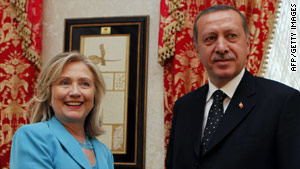
Istanbul, Turkey (CNN) -- U.S. Secretary of State Hillary Clinton, while praising Turkey's rise as a regional and economic power, on Saturday urged the government to improve its record on freedom of expression and equal protection for all citizens.

Speaking at a live talk show hosted by CNN Turk, CNN's sister network, the diplomat expressed concern about the reported jailing of about 50 journalists.

"I do not think it's necessary or in Turkey's interest to be cracking down on journalists and bloggers and the Internet, because I think Turkey is strong enough and dynamic enough" to allow debate, she said at the "Coffee Break With Hillary Clinton" show.

"I do think this is an area that deserves attention from citizens, from lawyers, because it seems to me inconsistent with all the other advances that Turkey has made," she added.

As Turkey continues accession talks with the European Union, Clinton said, the country has an opportunity to ease restrictions on certain groups and bolster protection for minorities.

Turkey has been gradually improving its record with the gay and lesbian community as it makes changes to conform to EU policy on human rights laws.

By late Saturday night, Clinton had arrived in Athens, Greece. Her flight west capped a whirlwind day in Turkey that included meetings with U.S. consulate employees, Ecumenical Patriarch Bartholomew I and Turkish political leaders.

During her visit, she also expressed condolences for the deaths Thursday of 13 Turkish soldiers.

The government blamed the hostilities on the Kurdistan Workers' Party, or PKK, a separatist movement regarded as a terrorist group by Turkey, the United States and other entities.

Clinton met with several Turkish leaders, including Prime Minister Recep Tayyip Erdogan. In these meetings, she discussed Turkey's economy, the opportunities for women and the young and the fact trade between Turkey and the United States had increased about 50%, she said.

The U.S. secretary called Turkey "one of the most exciting places in the world" and described its straddling of East and West as "an incredible advantage."

Clinton and Turkish government officials also discussed crises elsewhere in the region.

The United States just recognized the main opposition group in Libya "as the legitimate governing authority" in a country that Moammar Gadhafi has long ruled with an iron fist.

Turkish Foreign Minister Ahmed Davutoglu and Clinton also discussed unrest and large demonstrations in Syria.

"Stability inside Syria is important for Turkey," Clinton said at the coffee break. "But the right kind of stability -- a transition to democracy -- is what would be best for Turkey and even more importantly what would be best for the Syrian people."

In the past year, the relationship between Washington and Ankara has improved dramatically and, U.S. officials would argue, is in a pretty strong place. There are few major international issues where Turkey and the United States are not working closely together, such as the uprisings in North Africa and the Middle East, Afghanistan, counterterrorism, energy and the global economy.

Clinton's 12-day trip continues now in Greece, followed by stops in India, Indonesia and China.

"Murdoch's ad apologizes for 'serious wrongdoing' in hacking scandal"

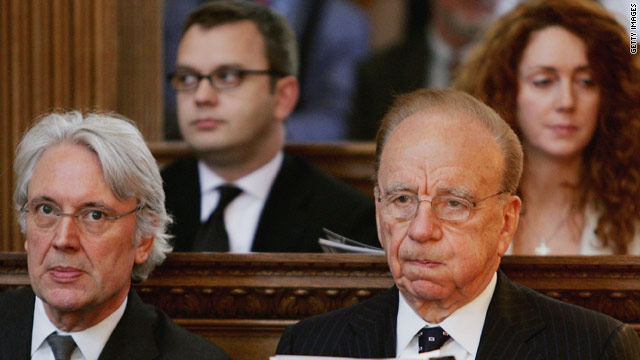
London (CNN) -- Rupert Murdoch apologized to the British public with full-page advertisements in seven national newspapers Saturday, a day after two senior executives resigned over a phone hacking scandal that has engulfed his media empire.

"We are sorry," Murdoch says in Saturday's ad, which will also run in newspapers Sunday and Monday.

"The News of the World was in the business of holding others to account. It failed when it came to itself. We are sorry for the serious wrongdoing that occurred. We are deeply sorry for the hurt suffered by the individuals affected."

Murdoch's apology comes after his media empire lost two top executives Friday.

Former News of the World editor Rebekah Brooks resigned from her post as chief executive at News International, the British arm of Murdoch's News Corp., early Friday.

Hours later, her predecessor, Les Hinton resigned.
Murdoch also visited the family of Milly Dowler, a murdered British teenager whose voice mail was allegedly hacked by staff working for the News of the World.

Police in the United Kingdom have identified almost 4,000 potential targets of phone hacking in documents recovered from a private investigator working for the paper.

There were also allegations that News Corp. reporters may have bribed police officers.

Murdoch's campaign of contrition comes 12 days after the scandal first broke and barely a week after the News of the World, Britain's best-selling Sunday tabloid, was shut down by News International in the face of public outrage.

The advertisement expresses regret for not acting more quickly "to sort things out," but Murdoch acknowledges that apologizing is not enough.

"Our business was founded on the idea that a free and open press should be a positive force in society. We need to live up to this," he says.

The media mogul pledged to take "concrete steps" to resolve issues and make amends.

"You will hear more from us," his message concludes.

Murdoch, his son, James, and Brooks are to appear before British politicians Tuesday to answer questions over the phone hacking scandal.

Some of the claims Brooks faces relate to the News of the World's alleged hacking, while she was editor, into Dowler's mobile phone account. She has warned that her answers may be limited by ongoing police and judicial inquiries.

"As chief executive of the company, I feel a deep sense of responsibility for the people we have hurt, and I want to reiterate how sorry I am for what we now know to have taken place," she said in a statement Friday.

Hinton, who most recently served as chief executive of Dow Jones, publisher of The Wall Street Journal, wrote to Murdoch to say that although he had been unaware of alleged misconduct when he was executive chairman of News International, which operated the now-defunct News of the World, he had to take responsibility.

"The pain caused to innocent people is unimaginable," he said in a letter provided by Dow Jones.

British Prime Minister David Cameron has been among those publicly decrying the hacking, blasting Murdoch's company Wednesday as he launched a high-powered judge-led investigation into the nation's press.

Yet he has his own ties to the scandal, given his relationship with Andy Coulson.

Coulson resigned as News of the World editor in 2007, after his former royal editor and a private detective were convicted of conspiracy to hack into royals' voice mails. But while offering his resignation, he insisted he had been unaware of the crimes and he was not charged at the time.

After last year's election, Cameron became prime minister -- and appointed Coulson as his communications director.

Coulson resigned as Cameron's spokesman in January when the scandal blew up afresh.

Cameron hosted Coulson overnight in March at Chequers, the prime minister's country estate, a Downing Street source said Friday. The aim of the invite, added the source, was to thank his former communications director for his work on Cameron's behalf.

Earlier this month, Coulson was arrested in connection with claims of phone hacking and corruption dating to his days as the News of the World editor.

After the arrest, the prime minister took full responsibility for hiring Coulson. But while not denying this personal connection, Cameron has maintained public pressure against News Corp.

Meanwhile, the FBI is also investigating News Corp. after a report that employees or associates may have tried to hack into phone conversations and voice mail of September 11 survivors, victims and their families.

Murdoch's News Corp. encompasses Fox News, The Wall Street Journal, the New York Post and Harper Collins publishers in the United States. News International -- a British subsidiary of News Corp. -- owns the Sun, The Times and The Sunday Times in Britain.

Saturday, July 16, 2011

"Murdoch begins series of apologies in phone-hacking scandal"

London (CNN) -- Two key executives in Rupert Murdoch's media empire resigned Friday, and their former boss added public relations muscle as he began a series of apologies in the phone-hacking scandal.

Out are Rebekah Brooks, chief executive of News International, and her predecessor in the job, Les Hinton, who most recently served as chief executive of Dow Jones, publisher of The Wall Street Journal.

Hinton wrote Murdoch that he had seen reports of actual and alleged misconduct when he was executive chairman of News International, which operated the now-defunct News of the World.

"The pain caused to innocent people is unimaginable," Hinton said in a letter provided by Dow Jones. "That I was ignorant of what apparently happened is irrelevant and in the circumstances I feel it is proper for me to resign from News Corp., and apologize to those hurt by the actions of the News of the World."

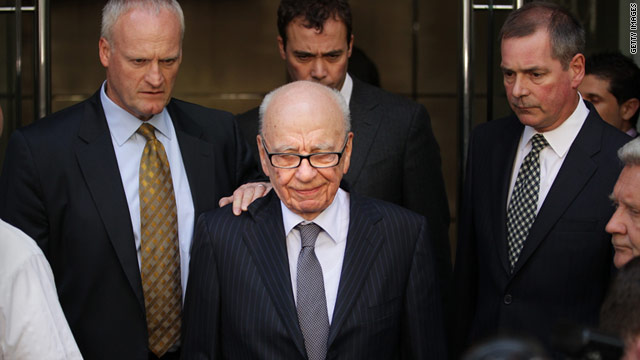
For his part, Murdoch began a campaign of contrition and reform Friday, apologizing to the family of a murdered British teenager whose voicemail allegedly was hacked by staffers of News of the World.

"As the founder of the company, I was appalled to find out what happened," Murdoch said after speaking with relatives of Milly Dowler, 13, who went missing and was later found dead. "Of course I apologized."

Murdoch will offer a broader apology to those whose privacy may have been violated by journalists in an ad that is to appear in newspapers Saturday.

Police in the United Kingdom have identified almost 4,000 potential targets of phone hacking. There were also allegations that News Corp. reporters may have bribed law enforcement officers.

Some of the claims Brooks faces relate to the News of the World's alleged hacking, while she was editor, into Dowler's mobile phone account.

Staffers were accused of intercepting messages in search of news. They then allegedly deleted messages to keep Dowler's mailbox from filling up, giving her family and friends false hope that the schoolgirl was still alive.

The family's attorney, Mark Lewis, said the family will seek "legal remedies" after their ordeal.

"They were suffering private grief," Lewis said. "People were intruding into it."

Murdoch appeared humble and sincere during the meeting, Lewis added. "He apologized many times."

Murdoch's News of the World, a 168-year-old tabloid that was Britain's biggest Sunday newspaper, folded over the weekend in the wake of accusations that its reporters illegally eavesdropped on the phone messages of murder and terrorism victims, politicians and celebrities.

"We are sorry for the serious wrongdoing that occurred," Murdoch will say in Saturday's ad. "We are deeply sorry for the hurt suffered by the individuals affected."

"The News of the World was in the business of holding others to account. It failed when it came to itself," according to text of the ad provided by News International, which will also express regret for not acting more quickly "to sort things out."

Murdoch will say in the ad that he realizes that apologizing is not enough and he pledges concrete action.

British Prime Minister David Cameron has been among those publicly decrying the hacking, blasting Murdoch's company Wednesday as he launched a high-powered investigation into the nation's press.

Yet he has his own ties to the scandal, given his relationship with Andy Coulson.

Coulson quit as News of the World editor in 2007, after his former royal editor and a private detective were convicted of conspiracy to hack into royals' voicemails. But even while offering his resignation, he claimed to be unaware of the crimes and he was not charged at the time.

Months later, Coulson joined up with Cameron, then the Conservative Party leader. After last year's election, Cameron rose to prime minister -- and took Coulson with him, as his communications director.

Coulson worked from Downing Street through January, when he resigned as Cameron's spokesman when the scandal blew up afresh.

Cameron hosted Coulson overnight in March at Chequers, the prime minister's country estate, a Downing Street source said Friday. The aim of the invite, added the source, was to thank his former communications director for his work on Cameron's behalf.

Then, earlier this month, Coulson was himself arrested in connection with claims of phone hacking and corruption dating to his days as the News of the World editor.

After the arrest, the prime minister took full responsibility for hiring Coulson. But while not denying this personal connection, Cameron has maintained public pressure against News Corp.

This is just one of a flurry of dizzying developments related to the scandal in recent days. News Corp., which has been at the center of the storm, has hired the firm Edelman to handle its public relations and prominent U.S. attorney Brendan V. Sullivan Jr. to help navigate.

One brick to fall Friday was Brooks, who had been under pressure to step down. A chief executive of News International, she was News of the World editor at the time of some of the most serious allegations against the newspaper.

"As chief executive of the company, I feel a deep sense of responsibility for the people we have hurt, and I want to reiterate how sorry I am for what we now know to have taken place," Brooks said in a statement through News International.

"I have believed that the right and responsible action has been to lead us through the heat of the crisis. However, my desire to remain on the bridge has made me a focal point of the debate."

She said that the focus on her is "detracting attention" from endeavors to fix the problems and that her resignation gives her more time to fight the allegations against her.

Cameron believes that Brooks' resignation was the right decision, a Downing Street spokesman said. Opposition Labour leader Ed Miliband said he was pleased she had "finally taken responsibility for the terrible events that happened on her watch, like the hacking of Milly Dowler's phone."

Former Deputy Prime Minister John Prescott, who says police now tell him his phone was hacked 44 times, also welcomed Brooks' resignation.

"She seems to be the center of all of it, and yet she keeps saying 'Not me' -- that seems to be the common line at News International," he said, adding that her resignation is "a decent step towards getting better and decent reporting in this country."

Prescott described Murdoch as a "spider in the middle of this web" and said it was "about time we took him on rather than running away from him."

Campaign group Hacked Off, which has been calling for a full inquiry into alleged phone hacking by News of the World, said: "The key issue is not however whether Rebekah Brooks is in work, but whether she lied to Parliament, told the full truth to the police or was engaged in a massive cover-up. That is what we want. The victims want to know."

James Murdoch, Rupert's son and chairman of News International, thanked Brooks for "her 22 years of service to the company" and said he understood her decision to resign.

"She has been one of the outstanding editors of her generation and she can be proud of many accomplishments as an executive. We support her as she takes this step to clear her name," he said in a statement.

"We will follow this up in the future with communications about the actions we have taken to address the wrongdoing that occurred," he said.

A day before she resigned, Brooks agreed to attend a hearing before British lawmakers Tuesday into the phone-hacking scandal. However, she said her answers might be limited by ongoing police and judicial inquiries.

James and Rupert Murdoch confirmed late Thursday that they would also appear at the July 19 hearing before the Culture, Media and Sport Select Committee, after initially declining to attend.

In Friday's statement, James Murdoch said he and his father would speak to the committee "directly about our determination to put things right. The company has made mistakes. It is not only receiving appropriate scrutiny, but is also responding to unfair attacks by setting the record straight."

Tom Mockridge will replace Brooks, News Corp. said Friday. Mockridge is a former newspaper journalist who has been the chief executive of Sky Italia since 2003.

Murdoch said Mockridge is an "outstanding executive with unrivalled experience across our journalism and television businesses."

Meanwhile, the FBI is investigating News Corp. after a report that employees or associates may have tried to hack into phone conversations and voice mail of September 11 survivors, victims and their families.

Murdoch's News Corp. encompasses Fox News, The Wall Street Journal, the New York Post and Harper Collins publishers in the United States. News International -- a British subsidiary of News Corp. -- owns the Sun, The Times and The Sunday Times in Britain.