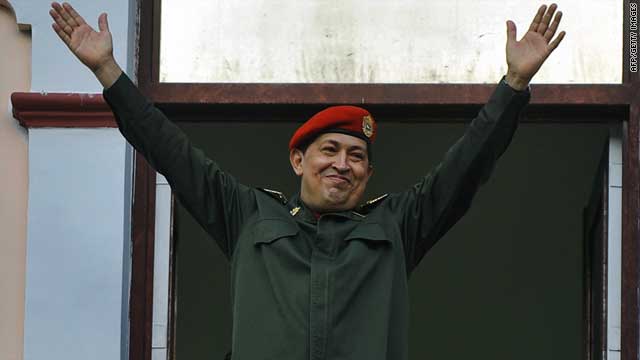
The president signed a decree allowing Vice President Elias Jaua and Finance Minister Jorge Giordani to make "some decisions that up to now depended on me."
State TV broadcast live images Saturday evening of the charismatic leader, who spoke in front of the aircraft that was to take him to Cuba.
"It's not time to die. It's time to live," he said, before boarding the plane.
Earlier Saturday, the ailing leader said that doctors, in the aftermath of surgery, have not
 found malignant cells in any other part of his body. He underwent surgery to remove a cancerous tumor last month.
Chavez resisted calls from the opposition to hand over the presidency to Jaua during his time in Cuba.
He did, however, give the vice president several powers, including the power of expropriation -- albeit with a presidential OK.
Jaua will also be able to name vice ministers and heads of agencies, approve transfers of budgets between ministries and exercise other budgetary powers.
The finance minister was given the power to make decisions on import taxes and value-added taxes.
Chavez made the powers announcement in a televised Cabinet meeting ahead of his trip to Cuba for treatment. He has not said what type of cancer he has, inviting widespread speculation.
Earlier in the day, the Venezuelan Congress voted to approve his visit to the Caribbean nation. Supporters of Chavez, who hold a majority in Congress, argued he was capable of leading the country from abroad.
It is not clear how long Chavez plans to stay in Cuba, where he has said he will begin chemotherapy treatments.
"Within the dynamic of this deep reflection, and this scenario that we are in, it will be very useful to make changes," Chavez said as he announced the delegations of power.
There will also be changes to his lifestyle, said Chavez, noting that he no longer drinks coffee. Before, he would drink "40 cups of coffee" during a meeting, he said.
Still, Chavez's critics and some analysts have questioned his ability to carry out his duties, particularly given that he is up for re-election next year. They have also complained about the lack of information available on his health. Chavez's expected absence from Venezuela will likely heighten both of those concerns.


0 comments:
Post a Comment